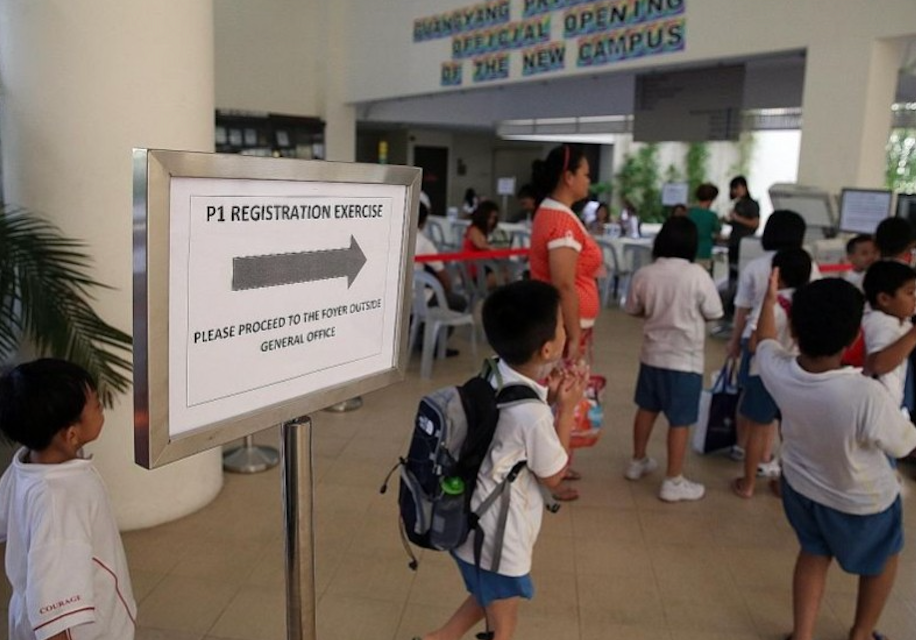
Every year, thousands of Singapore families sit down to work out which primary school their child should attend. The Primary One registration exercise, run by the Ministry of Education, decides this through a phased system that gives priority to children with existing ties to a school before opening remaining spots to everyone else.
For parents facing this for the first time, the process can feel confusing, especially when a popular school in the neighbourhood draws far more applicants than it has places. This guide walks through how the phases work, what documents matter, and how to plan a realistic shortlist of schools.
The Phased Structure Behind Primary One Registration
MOE organises registration into a series of phases, each opening to a progressively wider pool of applicants. The earliest phases are reserved for children who already have a sibling in the school or a parent who is a current staff member, while later phases open to children whose parents are alumni, or who live within a set distance of the school. The final phase is open to any child not yet placed, regardless of address or family connection.
Balloting occurs only when a phase receives more applications than there are vacancies left after earlier phases are filled. This means a school’s popularity in one year does not guarantee the same outcome the next, since vacancy numbers shift based on how many siblings or staff children apply first.
Each phase typically spans a few days, and schools publish the number of vacancies remaining before the next phase opens, which gives families a rough sense of how tight competition will be. A school that absorbs most of its intake through sibling and staff priority in phase 2A will have far fewer seats left for phase 2B and 2C applicants, while a newer school with fewer alumni ties tends to have more room in the later phases. Checking these published vacancy figures each year, rather than relying on last
year’s numbers, gives a far more accurate picture of the odds a family is facing.
- Phase 2A: Covers children with a sibling already studying in the school, or whose parent works there, with distance-based sub-priority if oversubscribed.
- Phase 2B: Opens to children whose parent is an alumnus, active in community or parent volunteer groups, or affiliated through religious or clan links tied to the school.
- Phase 2C: The general open phase for children not yet registered elsewhere, based primarily on home-to-school distance.
- Phase 2C Supplementary: A final catch-all round for children still without a placement after 2C, usually directed to schools with remaining vacancies.
Reading the Distance Rules Correctly
Distance between home and school is the deciding factor whenever a phase is oversubscribed and no sibling or alumni priority applies. MOE measures this using the registered address on the child’s identity documents, not a parent’s workplace or a grandparent’s flat where the child sometimes stays.
Families living within one kilometre of a school typically get first call within that priority group, followed by those within two kilometres, and finally those beyond two kilometres. This is why some parents choose to register their permanent address early, or why renting near a desired school has become a recognisable, if costly, strategy among a small number of households.
It helps to check the real walking or straight-line distance rather than assume based on a rough mental map. A school across a main road might measure differently from what seems like “just next door,” and these measurements decide tie-breaks when balloting is needed.
Choosing a School List That Matches Reality
A common mistake is putting only the most sought-after schools on the application list, then being disappointed when every one of them balloted out. Since the system processes a ranked list and only moves to a child’s next choice if the earlier one is unsuccessful, there is real value in including at least one school where admission is close to certain.
- The aspirational pick: A well-known school the family is interested in, even if the odds in a general phase are slim.
- The realistic pick: A school where the family likely qualifies under an earlier, less competitive phase.
- The safety pick: A school with a consistent record of vacancies after phase 2C, usually nearer to home.
- The home school: The school the child would be posted to by default if nothing else succeeds, worth knowing in advance.
Parents should also look past a school’s reputation for academic results and consider daily practicalities such as commute time, after-school care arrangements, and whether siblings will eventually attend the same school for consistency.
Preparing Documents Before Registration Opens
Registration happens over a short window each year, so documents should be ready well ahead of time rather than gathered at the last minute. Mistakes or missing paperwork can delay an application or push a family into a later, more competitive phase.
- Birth certificate: Needed to confirm the child’s date of birth and citizenship status for phase eligibility.
- Proof of address: Typically a recent utility bill, tenancy agreement, or official correspondence matching the registered address.
- Parent’s identity card: Used to verify alumni status, staff employment, or community group membership where relevant.
- School-specific forms: Some schools under phases 2B and 2C ask for additional declarations about volunteer hours or affiliation history.
Keeping digital copies of these documents in one folder saves time, especially for parents juggling registration alongside a full work schedule. It is also worth calling the school’s registration helpline a week or two ahead if any document looks unusual, such as a birth certificate issued overseas or an address that recently changed due to a lease renewal, since front-line staff can clarify exactly what substitute proof is accepted before the registration window opens and queues form at the school hall.
What Happens After Balloting
When a phase draws more applicants than vacancies, a computerised ballot decides placement among equally prioritised applicants, usually a random draw once the distance band is accounted for. Parents who are unsuccessful move automatically to their next listed school choice in the following phase, rather than needing to reapply from scratch.
It is worth noting that balloting outcomes are specific to that year’s applicant pool. A school that balloted heavily one year might have more vacancies the next, depending on how many sibling and staff priority places were used up. This year-to-year variability is one reason many parents avoid fixating on a single “must-have” school and instead build a list with real contingencies.
Some parents choose to attend a school’s open house or information session before registration opens, which, while not affecting the ballot itself, gives a clearer sense of class sizes, facilities, and the general atmosphere of the school. This on-the-ground impression often proves more useful for decision-making than online rankings, since two schools with similar academic results can feel very different once a parent walks through the corridors and sees how students interact during recess.
- Successful placement: Confirmed through official notification, with enrolment details to follow before the school year begins.
- Unsuccessful at first choice: Automatically considered for the next school on the list in the same or next phase.
- No placement after all phases: Directed to the 2C supplementary exercise, which allocates remaining vacancies based on distance.
Adjusting to Life After Placement
Once a placement is confirmed, the practical work begins. Families often need to sort out before and after-school care, since many primary schools run until early afternoon, leaving a gap before working parents return home. Some turn to student care centres located within or near the school compound, while others rely on relatives or domestic helpers.
Transport is another early decision point. Walking distance schools reduce dependence on arranged transport, while others require a school bus service or a fixed arrangement with the Land Transport Authority’s regulated private bus operators. Parents should also budget for uniforms, textbooks, and co-curricular activity fees, which vary by school and are usually clarified during the orientation period before term starts.
Many parents underestimate how much the first few weeks of Primary One differ from preschool life. Longer school days, a formal timetable, and homework routines all arrive quickly, and children who are not used to sitting through structured lessons can take a few weeks to adjust. Building in a buffer period at home, with earlier bedtimes and a calmer after-school routine, tends to ease this transition more than any academic preparation done before the term starts. It also helps to connect with other parents in the same class early on, since informal parent chat groups often become the fastest way to learn about schedule changes, show-and-tell requirements, or last-minute notices from the form teacher.
- Student care: Centres offering supervised care, meals, and homework time until parents are free to collect the child.
- School transport: Either a dedicated bus arrangement or public transport routes planned around the child’s schedule.
- Orientation sessions: Usually held before the school year starts, covering uniform fittings, class allocation, and basic routines.
Navigating Phase 2B Eligibility in Practice
Phase 2B often causes the most confusion because it bundles together several different groups: alumni parents, parent volunteers, and families connected through a school’s affiliated religious or clan body. Each of these routes has its own qualifying period and paperwork, and missing a deadline for one does not automatically shift an applicant into another.
Parent volunteer status, for instance, typically needs to be built up over a set number of hours across the year before registration, logged through the school itself rather than claimed after the fact. Families hoping to use this route should contact the school early in the year to confirm the minimum commitment and how attendance is tracked, since informal participation without a record rarely counts.
Alumni status is usually simpler to prove, often requiring only the parent’s own graduation year and the relevant certificate or testimonial, but schools sometimes ask for additional confirmation if records from decades ago are hard to trace. Clan or church affiliation routes vary even more widely from school to school, with some requiring membership that predates the child’s birth. Parents considering this phase should read each school’s specific notice carefully rather than assuming the rules match a sibling’s school or a friend’s experience, since requirements are not standardised across every institution.
Even within phase 2B, distance still acts as the tiebreaker once all other qualifying criteria are equal. A family with alumni status living five kilometres away may still be overtaken by another alumni family living one kilometre closer, so proximity remains relevant even for parents who assumed their connection alone would secure a place.
Religious and clan affiliation routes deserve special mention because they are often the least visible to families outside that community. A school affiliated with a specific faith organisation may reserve a modest number of 2B places for children whose family has a long-standing link to that organisation, verified through membership records rather than a simple declaration. Parents exploring this route should approach the affiliated body directly, well before the registration period, rather than the school itself, since the school typically only verifies a list already confirmed by the organisation.
Weighing School Choice Against Everyday Household Routines

Academic rankings tend to dominate early conversations about school choice, but the daily rhythm of school life matters just as much once term begins. A school fifteen minutes from home by foot changes a family’s morning routine in ways that a school requiring two bus transfers never will, regardless of how each school performs academically.
Parents juggling work schedules should think through who manages drop-off and pick-up on a typical day, and whether that person can reliably make the journey within the time available. Grandparents who care for children after school may have mobility limits that make a longer commute impractical, even if the school itself is a strong academic fit.
- Morning logistics: Consider who walks or drives the child, and whether that fits around work start times.
- After-school pick-up: Factor in who is free in the early afternoon, since most primary schools end well before a typical workday does.
- Sibling coordination: Families with children at different schools should weigh whether staggered timings create unmanageable overlaps.
- Weekend commitments: Co-curricular activities and enrichment classes often cluster near the school, so proximity affects weekends too.
Some families deliberately choose a school slightly further from home because it offers a specific co-curricular strength, a distinct learning support programme, or simply a better fit for a child’s temperament. There is no universally right answer, only a conscious trade-off between convenience and other priorities that each household must weigh for itself.
Final Thoughts
Primary One registration rewards early planning more than last-minute strategy. Knowing which phase a family qualifies for, measuring distance accurately, and building a school list with a real safety option all reduce the stress of the exercise by a wide margin compared with going in without preparation.
Every family’s priorities differ, whether that means proximity, a sibling’s existing school, or a specific programme on offer. What matters most is treating the list as a set of realistic contingencies rather than a single hope pinned on one school. With documents ready and expectations calibrated to how the phases work in practice, most families land on a placement that serves their child well for the years ahead.
Read more about Singapore Trends
Frequently Asked Questions
1. Can a family apply to more than one school at the same time?
A family lists schools in order of preference for each phase, but registration proceeds against one school at a time within that ranked order. If the top choice is unsuccessful, the application automatically rolls into the next listed school in a later phase, so there is no need for separate simultaneous applications. This matters because parents sometimes assume they must physically re-register at every school on their list, when in fact the system handles the rollover without further action once the initial list is submitted correctly.
2. Does owning a nearby investment property count for distance priority?
Distance priority is based on the address where the child and a parent are officially registered as residing, not on any other property a family owns. Using a non-residential address purely to gain proximity advantage goes against the intent of the distance rule and can be flagged during verification.
3. What happens if a family moves house after registering?
Once registration for a given year has closed, the address on record at the time of application is what counts for that cycle. A move afterward does not retroactively change the outcome, though it may be worth updating official records for future matters such as transport planning.
4. Are international or returning Singaporean families treated differently?
Singapore citizens generally receive priority over permanent residents and international students across most phases, with citizens in phase 2C given an edge over non-citizens in balloting. Families returning from abroad should register as early as their eligibility phase allows to avoid being pushed into the most competitive open round.
5. How many schools can realistically be listed per phase?
Most phases allow a short list of choices, often around two to three schools, ranked in order of preference. Listing a realistic spread, rather than several equally competitive options, improves the chance of securing a reasonably suitable placement.
6. Is it possible to transfer schools after Primary One begins?
Transfers after the school year has started are uncommon and generally only considered for exceptional circumstances, such as a confirmed house move far from the current school, a medical need, or a family relocating from overseas partway through the year. Most families treat the Primary One placement as fixed for the full six years of primary education, and schools are generally reluctant to approve a transfer purely on preference grounds once a child has settled into class routines and friendships.