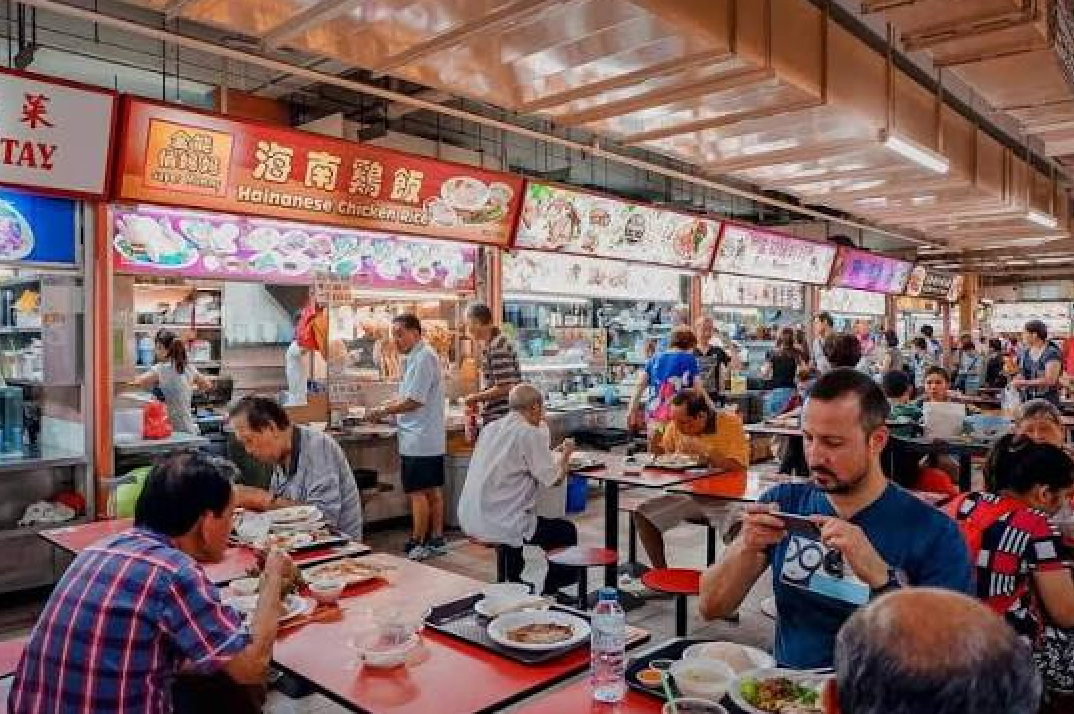
Hawker centres sit at the heart of daily life in Singapore, serving as the place where neighbours grab breakfast before work, families gather for a cheap weeknight dinner, and elderly residents sip coffee over the morning newspaper. Behind the plates of chicken rice and bowls of laksa lies a system of food safety grading run by the National Environment Agency, along with pricing patterns that shift from one estate to another.
This guide breaks down how the grading system works, what drives price differences between stalls, and how diners can make smarter choices without needing to become food safety experts themselves.
NEA Hygiene Grades and What They Signal
Every licensed food stall in Singapore displays a grading card near its service counter, a requirement enforced by the National Environment Agency as part of its routine inspection regime. The card uses a simple letter scale, with the highest grade reflecting consistently clean food handling practices and the lowest grade signalling repeated lapses that inspectors have flagged.
Inspections cover far more than what is visible to a queuing customer. Officers check how raw and cooked food is stored, whether temperature control for perishable ingredients is maintained, how utensils are cleaned between uses, and whether pest control measures are in place around the stall and the wider centre. A stall can look spotless at the counter yet receive a lower grade because of issues in its food preparation area that customers never see.
- Grade A: Reflects very good hygiene standards across most inspection criteria, with few or no deficiencies found.
- Grade B: Indicates good standards overall, with minor issues noted that do not pose an immediate food safety concern.
- Grade C: Signals several lapses that inspectors expect the stallholder to correct, often tied to storage or cleaning practices.
- Grade D: Reserved for stalls with serious repeated lapses, sometimes alongside enforcement action or a suspension.
Grades are reviewed periodically, and a stall can move up or down between cycles depending on how it performs at each inspection. A stall that recently dropped a grade is not necessarily unsafe to eat at, but it is worth watching for whether the operator addresses the issues before the next review.
The grading card itself is usually a small laminated sheet pinned near the till or displayed on the stall’s signboard, and it carries a date showing when the current grade was awarded. Diners who want more context than the letter alone can sometimes find a broader summary of a centre’s overall standing through official channels, which occasionally publish lists of stalls flagged for repeated issues as part of a wider public accountability effort. This additional layer of transparency gives cautious diners a second source to check beyond the card itself, especially when deciding whether to try an unfamiliar stall for the first time.
Price Patterns Across Singapore’s Hawker Centres
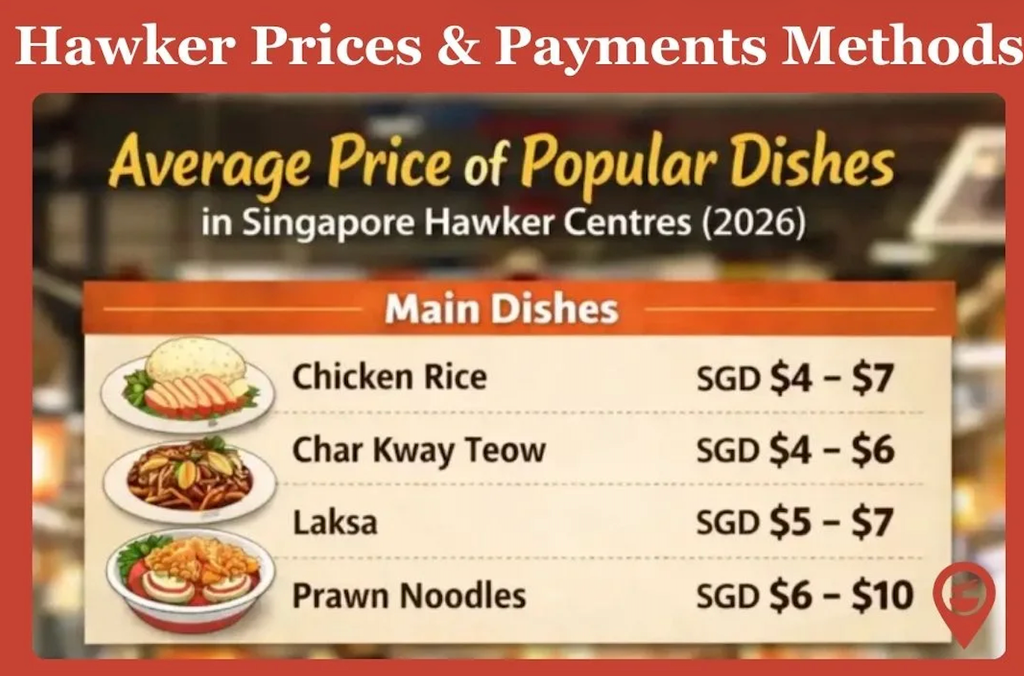
Prices at hawker centres are not set centrally, which means a plate of fried noodles in one estate can cost noticeably less than the same dish a few train stops away. Several factors drive this variation, and recognising them helps explain why two seemingly identical stalls charge different amounts.
Rental structure plays a large role. Stalls in centres managed directly by town councils or NEA tend to have more predictable rents, while those in centres run by third-party operators sometimes face higher or more variable charges that get passed on through menu prices. Location matters too, since centres near office clusters or transport nodes can sustain higher prices due to steady weekday footfall, while those deep in residential estates often rely on repeat customers who expect prices to stay affordable.
- Subsidised legacy stalls: Older stalls with long-standing tenancies sometimes benefit from lower rent, reflected in comparatively modest prices.
- High-traffic locations: Centres near MRT interchanges or business districts often see higher average prices across most stalls.
- Ingredient-driven dishes: Items relying on seafood or specific cuts of meat fluctuate with wholesale market prices more than noodle or rice-based dishes.
- Time-of-day pricing: Some stalls apply a small surcharge during peak lunch hours or on public holidays to offset higher ingredient costs.
Portion size also varies more than many diners realise. Two stalls charging the same price might serve noticeably different quantities, so value is not always reflected by the sticker price alone.
Inflation in ingredient costs has also pushed average prices upward over the years, a trend diners often track informally by comparing what a plate of economy rice or a bowl of noodle soup cost a decade ago against today. Stallholders facing rising costs for cooking oil, flour, or fresh produce sometimes adjust portion sizes instead of raising prices outright, a quieter form of cost management that regular customers notice over time even if the number on the menu board stays unchanged for a while.
Spotting a Well-Run Stall Before You Order
Diners do not need formal food safety training to make a reasonably informed choice before joining a queue. A few visible cues often say more than the grading card alone, especially for stalls a diner has never tried before.
Clean surfaces around the cooking area, properly covered ingredients, and staff who handle raw and cooked items with separate tools are good signs. A stall where raw meat sits uncovered near the service counter for extended periods, or where the same tongs handle both raw and ready-to-eat food, deserves a second look regardless of what grade is displayed.
Queue length offers an imperfect but useful signal too. A stall with a steady stream of regular customers is likely to turn over ingredients quickly, reducing the chance of food sitting out for long periods. This is not a guarantee, since a popular stall can still cut corners under pressure, but consistent turnover generally works in a diner’s favour.
Watching how a stallholder handles money is another small but telling cue. A cook who changes gloves or washes hands after handling cash before returning to food preparation is following a basic hygiene habit that not every stall maintains consistently. It is a minor detail easy to miss in a busy queue, but regular hawker centre diners often pick up on these small routines over repeated visits, forming an informal mental shortlist of stalls they trust without ever needing to read a single inspection report.
Peak-Hour Crowds and Seat-Hunting Etiquette
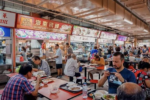
Lunchtime at a hawker centre near an office cluster can feel like a small logistical exercise. Seats fill quickly, queues stretch past the stall boundary, and the unwritten rules around “chope-ing” a table with a packet of tissue paper or a name card become second nature to regular visitors.
These informal norms, which have developed organically among long-time patrons rather than through any official rule, are worth knowing for newer diners who want to avoid awkward moments. Reserving a seat before ordering is broadly accepted practice, provided the diner returns within a reasonable time and does not occupy more seats than the group needs.
- Reserve before ordering: Leave a small personal item to mark a seat, then proceed to order food.
- Share tables during peak hours: It is common and expected to share a large table with strangers when seating is tight.
- Clear your own tray: Many centres now expect diners to return trays and trash to designated points after eating.
- Avoid lingering past a meal: During the busiest hours, vacating a table promptly for others is considered good manners.
Off-peak visits, typically mid-morning or mid-afternoon, remain the easiest way to avoid the crowd altogether, with shorter queues and more relaxed service from stallholders who are not racing through a rush.
Cashless Payment and the QR Code Shift
Hawker centres have moved steadily toward cashless payment over recent years, encouraged partly through government-backed digitalisation pushes involving agencies such as IMDA alongside participating banks and payment providers. Most stalls today accept at least one form of QR-based payment, and many accept several, alongside the usual option of paying in cash.
This shift has changed daily habits for regular diners, who increasingly default to scanning a code rather than carrying coins for a cheap meal. Older stallholders and older customers have adapted at different paces, and some stalls still prefer cash for small transactions due to processing fees charged on card or e-wallet payments, which can eat into already thin margins on a low-priced dish.
- QR code payment: Scan-to-pay options linked to major banks or e-wallet providers, now common across most centres.
- Contactless card payment: Tap-to-pay terminals at some stalls, though less universal than QR-based options.
- Cash: Still accepted almost everywhere, and sometimes preferred by stallholders for very small orders.
Diners who regularly visit hawker centres often keep a small amount of cash on hand regardless, since a handful of older or smaller stalls have yet to adopt digital payment fully, and a queue is not the moment to discover a stall does not accept the app already open on a phone screen.
Comparing Hawker Meals Against Other Dining Options
Hawker food remains one of the more affordable ways to eat out in Singapore, especially when weighed against casual dining restaurants or food court chains in shopping malls. The comparison is not purely about price, though, since the experience, ambience, and convenience differ in real ways between these options depending on the occasion.
A family celebrating a birthday might choose a restaurant for the seating comfort and air-conditioning, while the same family’s weekday dinner is far more likely to come from a nearby hawker centre purely out of practicality. Food courts inside malls occupy a middle ground, often pricier than a standalone hawker centre but more sheltered and air-conditioned, appealing to diners who want convenience during a shopping trip.
- Standalone hawker centres: Generally the most affordable option, often open-air with fans rather than air-conditioning.
- Mall food courts: Priced somewhat higher, trading some affordability for air-conditioned comfort and mall convenience.
- Casual restaurants: Noticeably pricier, suited to sit-down occasions rather than quick daily meals.
For many households, the weekly food budget stretches furthest by mixing these options, relying on hawker centres for routine meals while reserving restaurants for special occasions.
Hawker Centre Upgrading and Younger Stallholders
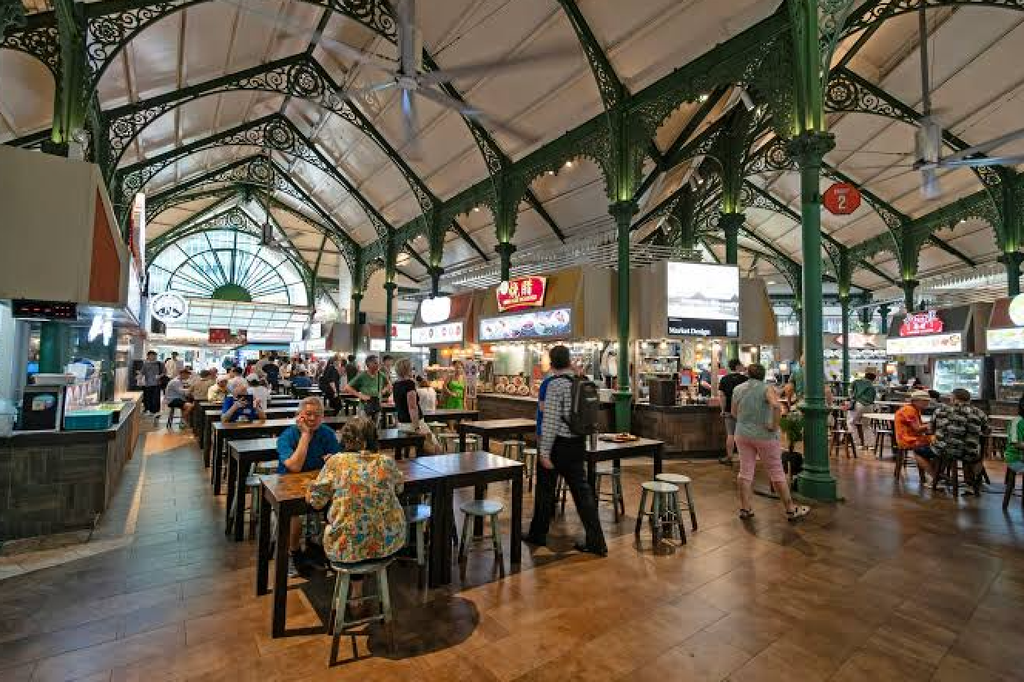
Many hawker centres across Singapore have undergone renovation in recent years, often coordinated through town councils or government agencies to modernise ageing infrastructure, improve ventilation, and add features such as centralised dishwashing to lighten the load on individual stallholders. These upgrades sometimes come with a temporary relocation period, during which stalls operate from a nearby interim site while renovation work proceeds.
Alongside physical upgrading, there has been a quiet generational shift at some stalls, as children of ageing hawkers take over recipes passed down over decades, sometimes introducing modest menu tweaks or extended operating hours to suit changing customer habits. Programmes supporting new hawkers entering the trade have also emerged, aimed at keeping the ecosystem from shrinking as older stallholders retire without a successor.
This generational handover matters for diners too, since a stall’s character can shift noticeably once a new generation takes charge, whether through a slightly different seasoning balance or a renewed interest in maintaining the dish exactly as an older customer remembers it.
Centres that have gone through a full redevelopment often reopen with wider walkways, better lighting, and more seating spread across the hall, addressing complaints that had built up over years of ageing infrastructure. Some diners miss the slightly worn, old-school atmosphere of the original centre, while others appreciate the improved airflow and cleaner common areas. Either way, the renovation cycle tends to bring a short-term dip in footfall as regulars take time to rediscover their favourite stalls in a rearranged layout, before settling back into familiar routines within a few months.
Food Safety Habits Worth Adopting as a Diner
Beyond choosing a stall with a reasonable hygiene grade, diners can take a few simple steps to reduce their own risk when eating out regularly. These habits matter more for dishes involving raw or lightly cooked ingredients, such as certain seafood preparations, where freshness has a bigger impact on food safety than with thoroughly cooked dishes.
- Check freshness cues: Look at colour, smell, and texture before eating, especially for seafood or egg-based dishes.
- Avoid food left sitting out: Dishes displayed uncovered for long periods, especially in warm weather, carry higher risk.
- Wash hands before eating: Many centres provide handwashing points, worth using given the communal nature of seating areas.
- Report concerns to NEA: Persistent cleanliness issues can be reported through official feedback channels for follow-up inspection.
These habits do not replace the grading system, but they add a practical layer of judgement that complements what inspectors check during periodic visits. Families eating with young children or elderly relatives often apply a slightly stricter personal standard than the grading card alone would demand, favouring stalls they have visited many times over an unfamiliar one simply because the dish looked appealing from across the hall.
Final Thoughts
Hawker centres remain one of the most distinctive parts of daily life in Singapore, blending affordability, convenience, and a food safety system that, while imperfect, gives diners a reasonable basis for choosing where to eat.
Grades offer a useful starting point, but pairing them with simple observational habits, such as watching how food is handled and how quickly a stall turns over its ingredients, gives a fuller picture than any single letter on a card. Prices will keep shifting with rent, location, and ingredient costs, but the core experience of grabbing a quick, satisfying meal among neighbours is unlikely to disappear from the national routine anytime soon.
Read more about Singapore Trends
Frequently Asked Questions
1. How often are hawker stalls inspected by NEA?
Inspection frequency varies by stall history and past performance, with stalls that have a strong track record typically inspected less often than those with previous lapses. A stall that has recently received a lower grade or faced enforcement action is likely to see more frequent follow-up visits until standards improve consistently.
2. Does a lower hygiene grade mean the food is unsafe to eat immediately?
A lower grade reflects accumulated lapses noted during inspection rather than an immediate health emergency, though it does suggest a higher likelihood of practices that could lead to food safety issues over time. Diners who prefer caution may choose to avoid stalls with persistently low grades, especially for dishes involving raw or minimally cooked ingredients.
3. Why do some stalls not display a grading card at all?
Newer stalls that have not yet completed their first full inspection cycle may display a temporary notice instead of a graded card, since grading typically follows a track record built over multiple inspections. Diners can still ask stallholders directly or check with the centre’s management office if a card is missing or unclear.
4. Are prices at government-built hawker centres regulated?
There is no fixed price control across hawker centres, though centres managed with support from town councils or built under newer public initiatives sometimes have rental structures designed to keep stall costs, and by extension menu prices, more moderate than fully private arrangements. This is more of an indirect influence than a strict regulation on what a stall can charge.
5. Is it normal to tip at a hawker centre?
Tipping is not a customary practice at hawker centres, and stallholders generally do not expect it. Prices are set to reflect the full cost of the meal, and most diners simply pay the amount shown on the menu board without adding anything extra.
6. What should a diner do if they experience food poisoning after eating at a hawker stall?
Seeking medical attention promptly is the first priority, followed by reporting the suspected source to NEA through its official feedback channel so the stall can be investigated. Keeping details such as the stall name, date, and dishes ordered helps investigators trace the issue more efficiently.