
Stock Market
Top 3 Blue Chip Stocks for Smart Investors March 2026


Why Blue Chip Stocks Matter in 2026
Markets in 2026 still feel like a mixed bag. Some sectors are roaring ahead, while others are slowing down. Interest rates, inflation, and geopolitics can change the mood fast. In times like these, many long-term investors circle back to the same idea blue chip stocks.
Blue chip stocks are shares of large, well-known companies with a history of surviving tough cycles. They’re often leaders in their industries, and they typically generate reliable cash flow. That doesn’t mean they’re “safe” in the sense of guaranteed returns. Nothing in investing is guaranteed. Still, blue chip stocks can help reduce the odds of nasty surprises, especially for people investing for retirement, education, or long-term wealth.
For investors based in Singapore, blue chip stocks can also play another role. Many of the world’s strongest companies are listed in the United States. That gives local investors a way to diversify beyond the Singapore market and participate in global growth trends. If you’ve ever heard someone say, “Don’t put all your eggs in one basket,” this is what they mean.
Recommended reads:
For safe rates and smooth exchanges, read our guide on Trusted Forex Services at Arcade Money Changers AMC SG.
What “Blue Chip” Means (Simple Definition)
A blue chip company usually has:
- A strong brand that customers trust
- A proven business model
- Stable or growing cash flow
- A solid balance sheet
- The ability to pay dividends or reinvest profit wisely
Because of these traits, blue chip stocks often recover faster after market drops. Over time, that can make a big difference through compounding.
How Smart Investors Think About Risk
Smart investors don’t try to avoid risk completely. They manage it. Here are a few practical habits they use:
- They invest with a time horizon of years, not weeks.
- They diversify across industries and regions.
- They focus on business strength, not just hype.
- They try not to panic when headlines get loud.
And yes, they understand that even blue chip stocks can fall. A great company can still be overpriced. Or it can face new competition. That’s why picking matters.
How We Picked the Top 3 Blue Chip Stocks

Choosing blue chip stocks isn’t about guessing which ticker will “moon” next. It’s about stacking the odds in your favor. For this March 2026 list, the goal is to spotlight businesses with durable advantages and long runways, while still keeping the discussion simple enough to act on.
Screening Checklist (E-E-A-T Framework)
To keep the process grounded, we used a practical checklist based on experience, expertise, authoritativeness, and trust:
- Business quality: Is the company a leader with a clear edge?
- Financial strength: Does it generate strong free cash flow and maintain healthy debt levels?
- Consistency: Does it have a track record across multiple market cycles?
- Governance and culture: Does management allocate capital responsibly?
- Future relevance: Is the company positioned for 2026–2036 trends?
This approach doesn’t promise perfect picks. However, it aims to reduce the chance of buying into weak businesses.
Practical Notes for Singapore Investors
If you’re investing from Singapore, keep a few real-world points in mind:
- Currency exposure: Many global blue chip stocks trade in USD, so SGD-USD moves can affect your returns.
- Dividends: US dividends may be subject to withholding tax depending on the structure and your broker setup.
- Access and costs: Brokerage fees, FX fees, and platform features vary. Over time, costs matter.
Now let’s get to the shortlist.
Top 3 Blue Chip Stocks: Quick Snapshot
The three blue chip stocks below are widely followed, financially strong, and positioned for long-term relevance.
| Company | Sector | Why it’s considered blue chip | What investors typically like |
| Microsoft | Technology | Deep enterprise moat, strong cash flow, multiple growth engines | Cloud, AI, recurring revenue, balance sheet strength |
| Johnson & Johnson | Healthcare | Defensive demand, diversified healthcare footprint, long dividend history | Stability, dividends, resilience in downturns |
| Visa | Financial services | Global payment network, high margins, powerful network effects | Long-term shift to digital payments |
Each one serves a different role. Together, they create balance tech growth, healthcare defense, and global commerce exposure.
Blue Chip Stock #1: Microsoft (MSFT)

Microsoft is often described as a “boring” tech giant, and that’s actually a compliment. In 2026, the company still benefits from one of the strongest positions in enterprise software and cloud infrastructure. It sells tools businesses rely on every day, and that creates sticky customer relationships.
When people talk about blue chip stocks in technology, Microsoft tends to come up quickly. It’s big, profitable, and deeply embedded in how modern work gets done.
Why Microsoft Stays a Blue Chip Stock
Microsoft’s strength comes from a few layers that work together:
- Enterprise software dominance
Products like Windows, Office, and enterprise tools remain core business infrastructure. Companies don’t switch these systems lightly. That’s a moat. - Cloud scale and recurring revenue
Cloud services are a major driver of growth for many large tech firms. The important part is not just revenue growth, but the recurring nature of subscriptions and long-term contracts. - AI as an accelerant
In 2026, AI isn’t a side project. It’s becoming a productivity layer across software. The companies that can integrate AI into workflows without breaking trust or security are likely to win long term. - Financial power
Strong cash flow gives Microsoft options. It can invest, acquire, buy back shares, and still stay resilient.
In plain terms, it’s not just a tech company. It’s a business infrastructure company. That’s why many investors treat it as a core holding among blue chip stocks.
What Could Go Wrong
Even great businesses have risks. For Microsoft, common ones include:
- Regulation: Large tech firms face more scrutiny over time.
- Competition: Cloud and AI markets are competitive and fast-moving.
- Valuation risk: A wonderful company can still be a poor investment if bought at an inflated price.
- Execution: Integrating new AI features at scale must be done carefully, especially for security-sensitive clients.
Simple Watch List Metrics
If you’re tracking Microsoft as one of your blue chip stocks, keep an eye on:
- Growth in cloud-related revenue lines
- Operating margins and whether they stay healthy
- Free cash flow trends
- Customer retention and enterprise adoption signals
You don’t need to be an analyst. Just look for steady progress, not perfection.
Blue Chip Stock #2: Johnson & Johnson (JNJ)

Johnson & Johnson has long been viewed as a defensive cornerstone. People need healthcare in good times and bad times. That’s why many investors turn to healthcare blue chip stocks when markets feel shaky.
In 2026, Johnson & Johnson still stands for something important: people continue to need healthcare even when the economy cools down.It’s the kind of company many families hold across generations, partly because it tends to prioritize stability and shareholder returns.
Why J&J Remains Defensive
Johnson & Johnson stands out for a few reasons:
- Healthcare is non-optional
Demand for medicine, treatments, and medical solutions tends to be steady. People don’t pause healthcare because GDP is down. - Diversification inside healthcare
A broad base can reduce reliance on any single product. That can smooth results over time. - Cash flow and shareholder returns
Mature healthcare companies often aim to return value to shareholders through dividends, while still investing in research.
For investors building a portfolio of blue chip stocks, J&J can act like a shock absorber. It may not always be the fastest grower, but it’s often more stable during downturns.
Key Risks to Track
Healthcare isn’t risk-free. Here are a few risks worth watching:
- Legal and litigation risks: Large healthcare firms can face ongoing legal issues.
- Pipeline risk: Research outcomes matter. Not every project succeeds.
- Pricing and policy pressure: Healthcare pricing is a sensitive topic, and rules can change.
Simple Watch List Metrics
To keep things simple, you can track:
- Dividend coverage (is the dividend supported by cash flow?)
- Research and development progress (broadly, not day-to-day)
- Debt levels and credit strength
- Overall revenue stability across cycles
If you want a calmer ride, healthcare blue chip stocks like J&J often fit that bill.
Blue Chip Stock #3: Visa (V)

Visa is not a bank. It’s a payment network. That difference matters. Instead of taking on large credit risk like a lender, Visa generally earns fees by connecting merchants, banks, and consumers across a global network.
In 2026, the world keeps moving toward digital payments. People tap phones, pay online, and shop across borders. Visa tends to benefit from that long-term shift, which is why it’s frequently included in lists of blue chip stocks.
Why Visa Is Built for the Long Run
Visa’s advantages are simple but powerful:
- Network effects
The more people and merchants use the network, the more valuable it becomes. That’s hard to replicate quickly. - High operating leverage
Payment networks can scale efficiently. When volumes rise, profits can rise faster. - Global tailwinds
Digital commerce and travel trends can boost transaction volumes over time, especially cross-border spending. - Strong brand trust
In payments, trust is everything. Consumers and businesses want reliability.
For long-term investors, Visa can be a “steady grower” among blue chip stocks, benefiting from broad economic activity rather than a single product cycle.
Key Risks to Track
Visa’s main risks often include:
- Regulation and fee pressure: Governments may scrutinize payment fees.
- Competition: Other networks and new payment methods can take share.
- Consumer spending cycles: Recessions can reduce transaction volumes temporarily.
Simple Watch List Metrics
Helpful indicators include:
- Payment volume growth
- Cross-border volume trends
- Operating margin consistency
- Signs of network expansion in emerging markets
Visa won’t be exciting every quarter. But over long stretches, that steady compounding can be the whole point.
How to Build a Simple Blue Chip Portfolio (Singapore-Focused)

Picking blue chip stocks is only half the job. The other half is building a process you can stick with when markets get noisy.
A Starter Allocation Example
Here are two simple ways a Singapore-based investor might think about allocation. This is not a recommendation, just a practical example of structure.
| Investor style | Example approach | Goal |
| Conservative | Heavier weight in defensive holdings, smaller tech exposure | Smoother returns, less drawdown stress |
| Balanced | More even split across growth and defense | Blend of stability and long-term upside |
Many investors use dollar-cost averaging. It’s a fancy name for investing a fixed amount every month. When prices dip, you buy more shares. When prices rise, you buy fewer. Over time, it helps reduce the stress of timing the market.
Dividend and Currency Basics (Plain English)
If you buy US-listed blue chip stocks from Singapore:
- You may receive dividends in USD.
- Your return in SGD depends on both stock performance and currency movement.
- Currency swings can help or hurt in the short term, but long-term investors often accept it as part of global diversification.
A practical tip: avoid over-checking. If you track your portfolio daily, even blue chip stocks can feel volatile. Monthly or quarterly reviews are often enough for long-term plans.

FAQs (Before Conclusion)
1) Are blue chip stocks always safe?
No. Blue chip stocks can still drop sharply during market sell-offs. “Blue chip” means strong business quality and durability, not guaranteed gains.
2) How many blue chip stocks should I own?
Many long-term investors start with 3 to 10 strong holdings, then diversify further over time. What matters is that you understand what you own and why you own it.
3) Should I buy all at once or slowly?
If you’re worried about timing, investing gradually can help. A simple monthly plan is easier to follow and reduces regret if prices dip after you buy.
4) Do blue chip stocks pay dividends?
Many do, but not all. Some focus more on reinvesting cash for growth. Even dividend payers can change policies, so dividends shouldn’t be the only reason you buy.
5) What’s the biggest mistake investors make with blue chip stocks?
Overpaying and then panicking. People sometimes assume a great company can’t be overpriced. Or they sell during a downturn because headlines sound scary.
6) How do I know if a blue chip stock is getting weaker?
Watch for long-term deterioration, not one bad quarter. Examples include shrinking margins for several years, rising debt with falling cash flow, or losing market leadership.
7) Can Singapore investors buy these blue chip stocks easily?
Yes, many brokers provide access to US markets. Still, check trading fees, FX conversion costs, and dividend handling so you’re not surprised later.
Conclusion
Blue chip stocks can be a practical foundation for long-term investing in 2026, especially if you want quality, resilience, and businesses built to last. Microsoft offers a strong blend of enterprise stability and innovation. Johnson & Johnson can provide defensive strength and steadier demand. Visa adds exposure to global commerce and the continuing shift toward digital payments.
If you’re investing from Singapore, focus on a simple plan you can follow, keep costs reasonable, and give your holdings time to compound. Over the long run, patience often beats prediction.
Thanks for reading. If you’d like, share your investing time horizon and risk comfort level, and I can suggest a simple way to compare these blue chip stocks side by side without overcomplicating it.

The Franklin Technology Fund is one of the flagship offerings from Franklin Templeton Investments. Known for its strong focus on innovation, the fund targets high-growth technology companies worldwide. It is also widely referred to as the Franklin Templeton Technology Fund and is considered a go-to option for those looking to diversify their portfolios into the ever-evolving tech sector.
Why Invest in Franklin Technology Mutual Fund?
The technology sector has historically outperformed other sectors due to rapid innovation, scalability, and global demand. The Franklin Technology Mutual Fund taps into these dynamics by investing in companies that are leaders in areas like AI, cloud computing, semiconductors, and digital infrastructure. If you’re seeking exposure to top-performing tech stocks, this fund could be a compelling option.
Franklin Technology Fund Performance
One of the primary attractions is the Franklin Technology Fund performance over the years. While tech funds are known for their volatility, Franklin has shown resilience and consistent growth. In 2024, the Franklin tech fund returns exceeded market benchmarks, making it a solid performer among technology sector mutual funds.
Franklin Technology Fund Holdings
Curious about what powers this fund? The Franklin Technology Fund holdings include big names like Apple, Nvidia, Microsoft, and emerging tech players such as ASML and Snowflake. This mix of large-cap tech giants and innovative disruptors gives the fund a unique edge.
A Deep Franklin Technology Fund Review
Based on investor sentiment and performance metrics, our Franklin Technology Fund review reveals a well-diversified, growth-oriented portfolio. The fund consistently aligns with long-term tech trends and is managed by experienced professionals who understand the nuances of global innovation.
Franklin Technology Fund Analysis
A deeper Franklin Technology Fund analysis shows that the portfolio is structured to balance risk and reward. It leans toward companies with strong fundamentals and potential for exponential growth. The fund also frequently rotates sectors within tech, capitalizing on emerging sub-sectors like AI and quantum computing.
Franklin Technology Fund Portfolio Breakdown
The Franklin Technology Fund portfolio is about 70% U.S.-based tech companies, with the remaining 30% invested internationally. This global diversification makes it one of the leading global tech mutual funds today.
Understanding Franklin Technology Fund NAV
The Franklin Technology Fund NAV (Net Asset Value) is updated daily and reflects the fund’s per-share market value. It helps investors track their investment performance and make informed decisions.
Franklin Technology Fund Growth Prospects
Tech growth is not slowing down. The Franklin Technology Fund growth trajectory aligns with major tech innovations. Its strategy focuses on high-growth, scalable tech solutions with global market demand.
Franklin Technology Fund Assets and AUM
The fund manages billions in assets. The Franklin tech fund AUM (Assets Under Management) has grown steadily, indicating strong investor trust and confidence in its long-term performance.
Franklin Technology Fund Fees and Expense Ratio
The Franklin Technology Fund fees are competitive compared to other tech-focused mutual funds. With a reasonable expense ratio, investors benefit from active management without incurring high costs.
Franklin Technology Fund Returns and Benchmark
The Franklin Technology Fund benchmark is typically the NASDAQ-100 or S&P Technology index. The Franklin tech fund past performance consistently mirrors or beats these benchmarks, proving its robust investment strategy.
Franklin Templeton Innovation Fund vs. Others
The Franklin Templeton Innovation Fund is a variant that focuses even more on futuristic tech. When comparing Franklin tech fund vs Fidelity, the former leans more on high-risk/high-reward innovation, while Fidelity often plays it safer with large-cap tech.
Franklin Technology Fund for Beginners
It’s one of the better tech mutual funds for beginners due to its diversified holdings and professional management. A Franklin tech fund SIP (Systematic Investment Plan) allows small but regular investments, making it accessible to new investors.
Who Manages Franklin Technology Investment Fund?
The Franklin technology fund manager team is composed of experienced tech analysts and fund managers who bring in decades of experience. They closely monitor global tech trends and adjust the portfolio accordingly.
Technology Sector Performance in 2025
So far, the technology sector mutual fund landscape in 2025 has seen steady gains. The Franklin technology fund 2025 outlook remains bullish due to trends in AI, green tech, and digital infrastructure.
Franklin Templeton Equity Funds and Tech Focus
Among all Franklin Templeton equity funds, the technology fund stands out due to its concentrated focus and above-average returns. It’s an ideal option for tech-savvy investors or anyone looking to capitalize on digital transformation.
Franklin Technology Fund USA Focus
While globally diversified, a large portion of the Franklin Technology Fund USA investments reflect its bullish stance on American innovation hubs like Silicon Valley and Seattle.
Technology Mutual Fund Investment Strategy
As a technology mutual fund investment, it applies a blend of top-down and bottom-up approaches. This helps in capturing macroeconomic trends while also spotting company-specific opportunities.
Franklin Templeton Tech Portfolio Outlook
The Franklin Templeton tech portfolio is well-poised for long-term success. Key drivers include continued adoption of 5G, IoT, and AI.
Final Thoughts: Should You Invest in Franklin Technology Fund?
To invest in Franklin Technology Fund is to believe in the long-term future of technology. Its solid track record, skilled management, and diversified holdings make it one of the top tech mutual funds to invest in for 2025 and beyond.
FAQs About Franklin Technology Fund
- What is the Franklin Technology Fund? It’s a tech-focused mutual fund by Franklin Templeton that invests in high-growth technology companies.
- Is the Franklin Technology Fund a good investment in 2025? Yes, it offers strong exposure to emerging tech trends with a positive outlook.
- What companies are in the Franklin Technology Fund holdings? Holdings include Apple, Microsoft, Nvidia, ASML, and Snowflake.
- How has the Franklin Technology Fund performed historically? It has consistently outperformed sector benchmarks.
- What is the Franklin Technology Fund NAV? NAV represents the per-unit price of the fund, updated daily.
- Is this fund suitable for beginners? Yes, especially when investing through a SIP.
- What is the minimum investment amount? It varies depending on the platform and investment method.
- Can I invest in the Franklin Technology Fund from outside the USA? Yes, it is accessible globally through various investment platforms.
- What is the fund’s expense ratio? It has a competitive expense ratio among tech mutual funds.
- How often are holdings updated? Generally quarterly, though top holdings may be disclosed more frequently.
- What sectors within tech does it focus on? AI, cloud computing, semiconductors, and green tech.
- How does it compare to Fidelity’s tech fund? Franklin leans more into high-growth, while Fidelity often prefers established firms.
- Is it actively managed? Yes, with a dedicated team of tech analysts and managers.
- Can I redeem units anytime? Yes, but check for exit loads or fees on early redemption.
- Is it available on all platforms? Most major mutual fund platforms offer it.
- Is there a SIP option? Yes, making it accessible to new investors.
- Does it pay dividends? It may, depending on earnings and the distribution policy.
- What is the fund’s benchmark? Usually the NASDAQ-100 or a tech-heavy S&P index.
- Can I track it online? Yes, NAV and performance data are available on Franklin Templeton’s website.
- Is the Franklin Technology Fund safe? While no investment is without risk, this fund is diversified and professionally managed, making it a relatively safer bet within the tech sector.

The FSSA Dividend Advantage is a renowned equity income fund designed to tap into the power of dividend-paying companies, particularly across the Asia Pacific and emerging markets. It is crafted with a long-term view, aiming to deliver both sustainable income and capital appreciation. Managed by experienced professionals, the fund has carved a niche for investors seeking growth and yield in one basket.
FSSA Dividend Advantage Performance
When it comes to long-term investing, performance speaks volumes. The FSSA Dividend Advantage performance has shown resilience, with consistent returns even through volatile markets. Its emphasis on quality, cash-generating companies helps cushion downturns while capturing upside potential. Historical FSSA Dividend Advantage long-term returns indicate healthy capital appreciation alongside a competitive dividend yield.
The Fund Strategy: Quality and Sustainability
FSSA Dividend Advantage investment strategy revolves around investing in companies with robust balance sheets, sustainable dividend payouts, and strong corporate governance. With a bottom-up approach, the fund focuses on quality companies rather than chasing high yields. This strategy minimizes the FSSA Dividend Advantage risk by reducing exposure to highly leveraged or cyclical businesses.
FSSA Dividend Advantage Portfolio Breakdown
The FSSA Dividend Advantage portfolio reflects a strong tilt towards consumer, financial, and healthcare sectors. These sectors are chosen for their defensive characteristics and ability to provide steady cash flows. In terms of regions, the fund emphasizes Asia Pacific and emerging markets—areas with strong demographic and economic growth.
Holdings and Top Contributors
Some of the key FSSA Dividend Advantage top holdings include multinationals and regional champions with solid dividend histories. These businesses form the backbone of the fund’s consistent income generation. The FSSA Dividend Advantage holdings tend to be less volatile, providing a cushion in turbulent markets.
FSSA Dividend Advantage Fund Manager Insight
The fund is steered by experienced professionals known for deep market understanding. The FSSA Dividend Advantage fund manager provides a disciplined and research-driven approach to stock selection, ensuring each holding contributes to the fund’s objectives.
Dividend Yield and Income Generation
Investors often ask about the FSSA Dividend Advantage yield. The fund aims for a sustainable dividend payout, which generally falls between 3% and 5%, depending on market conditions. FSSA Dividend Advantage income stability makes it suitable for retirees or those seeking passive income.
ESG Focus and Sustainability
FSSA Dividend Advantage sustainability is integrated into the investment process. Companies are selected based on environmental, social, and governance (ESG) criteria. The fund’s positive FSSA Dividend Advantage ESG rating shows its commitment to responsible investing.
FSSA Dividend Advantage Class B and Fund Structure
FSSA Dividend Advantage Class B shares are commonly chosen for their reinvestment options and cost efficiency. The fund’s structure supports accumulation and distribution, catering to different investor needs.
Comparison and Benchmarking
FSSA Dividend Advantage comparison with other income funds often highlights its lower volatility and better downside protection. The fund’s unique approach allows it to shine in both bull and bear markets.
FSSA Dividend Advantage Review: What Analysts Say
Analyst-driven FSSA Dividend Advantage reviews often praise the fund for its disciplined process and consistent returns. Its risk-adjusted performance is one of the best in its category, making it a favorite among dividend investors.
Factsheets and Fund Documents
For in-depth information, the FSSA Dividend Advantage factsheet or FSSA Dividend Advantage fund factsheet PDF provide updated data on performance, portfolio allocation, and commentary. These documents include FSSA Dividend Advantage net asset value (NAV), FSSA Dividend Advantage distribution dates, and yield figures.
Annual Reports and Prospectus
The FSSA Dividend Advantage annual report and prospectus offer detailed insights into fund operations, financials, and strategy updates. These reports also outline the FSSA Dividend Advantage fund objective and upcoming market outlook.
Growth Potential and Outlook
The FSSA Dividend Advantage growth trajectory is driven by structural trends in Asia Pacific and emerging markets. The FSSA Dividend Advantage outlook remains optimistic, especially as developing economies continue to expand and urbanize.
Price Movements and Share Value
FSSA Dividend Advantage share price trends show consistent growth over time. Investors tracking the FSSA Dividend Advantage price can see it reflects the underlying performance and dividend payouts.
Risk and Volatility Profile
The FSSA Dividend Advantage volatility is relatively low compared to peers. Its diversified and conservative stock-picking approach results in smoother returns, especially during market shocks.
FSSA Dividend Advantage Trust Structure
As an investment trust, the FSSA Dividend Advantage trust structure provides liquidity and transparency, aligning with the interests of retail and institutional investors.
Distribution and Dividend History
Regular FSSA Dividend Advantage dividends make the fund attractive for income seekers. The fund follows a stable distribution policy, aligning with its yield and performance targets.
Who Should Invest in This Fund?
Whether you’re a retiree looking for income, or a young professional building wealth, the FSSA Dividend Advantage investment offers a balanced exposure to income and growth. It’s ideal for those with a long-term horizon and moderate risk appetite.
FAQs About FSSA Dividend Advantage
1. What is the FSSA Dividend Advantage fund? It’s an equity income fund investing primarily in Asia Pacific and emerging market dividend-paying companies.
2. Who manages the FSSA Dividend Advantage? The fund is managed by a team of seasoned professionals under First Sentier Investors.
3. What is the FSSA Dividend Advantage yield? The fund offers a dividend yield of approximately 3–5%, subject to market conditions.
4. Where does the FSSA Dividend Advantage invest? Primarily in Asia Pacific and emerging markets with a focus on quality companies.
5. What are the top sectors in the FSSA Dividend Advantage portfolio? Consumer, financials, and healthcare sectors dominate the portfolio.
6. Is the FSSA Dividend Advantage fund good for long-term investors? Yes, it’s designed for income and growth over the long term.
7. What is the NAV of the FSSA Dividend Advantage fund? The NAV is published regularly in the fund’s factsheet and on financial platforms.
8. How often are dividends distributed? Typically quarterly or semi-annually, depending on the share class.
9. What is the risk level of the FSSA Dividend Advantage? Moderate. It avoids high-risk, cyclical stocks and emphasizes stable dividend payers.
10. Is there a prospectus available? Yes, the FSSA Dividend Advantage prospectus is available through First Sentier Investors.
11. How does it compare to similar funds? It stands out for its risk-adjusted performance, ESG focus, and long-term track record.
12. Is the FSSA Dividend Advantage available in the UK? Yes, including via platforms like HL, Fidelity, and AJ Bell.
13. Can I reinvest dividends? Yes, depending on the share class (like Class B), you can reinvest dividends.
14. What is in the latest FSSA Dividend Advantage factsheet? Details on performance, top holdings, NAV, and manager commentary.
15. What are the long-term returns like? The fund has shown solid long-term returns with lower-than-average volatility.
16. What is the investment minimum? This varies by platform and jurisdiction, generally starting from £500 or equivalent.
17. Are there any sustainability factors? Yes, the fund integrates ESG criteria into its investment process.
18. How is the FSSA Dividend Advantage price determined? It’s based on the NAV and market conditions.
19. What are the fund’s fees? Management and performance fees vary by share class; check the prospectus for exact figures.
20. What is the FSSA Dividend Advantage investor report? A regular publication detailing fund updates, performance insights, and strategy outlook.
Final Thoughts
The FSSA Dividend Advantage stands out as a robust, income-focused investment option for those seeking a blend of stability and growth. Its disciplined strategy, quality stock selection, and ESG integration make it a compelling choice in today’s market landscape. Whether you’re evaluating the FSSA Dividend Advantage fund performance, portfolio makeup, or dividend yield, this fund offers a holistic and sustainable investment path.
Geo Energy Sharejunction has been popping up in almost every investor chat I’ve joined lately—and not without good reason. Imagine scrolling through your feed, skipping over the usual market noise, and there it is: Geo Energy, making waves on the SGX like it’s headlining a K-pop concert. Investors, both seasoned and newbies (like my cousin who just discovered dividends are not a kind of pizza), are eyeing this Singapore-based coal player for its steady payouts and ambitious future outlook. The company’s not just talking the talk—it’s knee-deep in coal dust in Indonesia, where it’s mining, moving, and exporting like a well-oiled machine.
I first heard about Geo Energy Singapore from a friend over coffee who whispered about “coal being the new black,” and while I rolled my eyes, I looked it up—and boom, there was real potential. This company isn’t just sitting on coal—it’s leveraging it. The dividends? Reliable. The Geo Energy share price? Buzzing. The future outlook? Bright enough to need shades, even in a mining pit.
Geo Energy Company Profile
Geo Energy is a Singapore-based public company focused on coal mining and energy-related services. It operates primarily in Indonesia, where it manages several coal mining concessions. The company’s core strength lies in its integrated business model, which spans coal mining, logistics, and export operations. According to the latest Geo Energy quarterly report, the firm has made significant improvements in production efficiency and revenue.
Geo Energy Financials and Earnings Overview
Recent Geo Energy financials indicate stable performance, supported by healthy earnings from strong coal demand. In its latest Geo Energy earnings release, the company reported a notable increase in net profit compared to the previous year. This growth is attributed to higher coal exports, cost control measures, and favorable commodity prices. The Geo Energy market cap has also seen an uptick, reflecting investor confidence in its operations.

Geo Energy Share Price and Chart Analysis
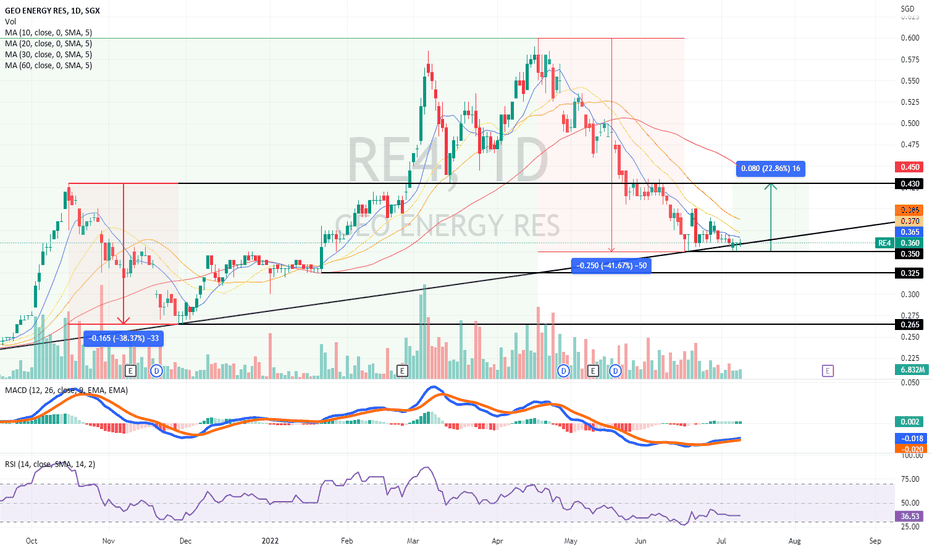
The Geo Energy share price has experienced fluctuations in response to global energy market trends and commodity cycles. A detailed Geo Energy chart analysis reveals patterns that appeal to both long-term investors and short-term traders. Based on recent Geo Energy technical analysis, the stock has shown bullish momentum supported by rising trading volume.
Geo Energy Stock Review and Performance
Geo Energy stock has performed commendably in the past year, benefiting from a robust coal demand and strategic business expansion. The Geo Energy share performance in 2025 has exceeded expectations, driven by favorable market conditions and investor sentiment. Geo Energy Sharejunction returns have outpaced several other SGX-listed mining stocks.
Geo Energy Dividends and Shareholders
One of the attractive aspects for investors is Geo Energy dividends. The company has maintained a steady dividend yield, which appeals to income-focused investors. The recent Geo Energy Sharejunction corporate actions also include dividend announcements that align with its goal of maximizing shareholder value. Existing Geo Energy shareholders have benefited from both capital gains and dividend income.
Geo Energy Mining Operations and Coal Production
Geo Energy’s core business revolves around coal mining. Its mining operations in Indonesia are among the largest in Southeast Asia. The company’s Geo Energy coal business and export strategy have enabled it to capture a significant share of the regional coal market. In terms of Geo Energy production volume, the company reported record-high outputs this year, signaling operational efficiency.
Geo Energy Business Model and Sustainability
The Geo Energy business model is vertically integrated, encompassing mining, transportation, and marketing. This model ensures streamlined operations and cost efficiency. The company is also making strides in sustainability. Geo Energy Sharejunction sustainability initiatives include environmental impact reduction and adopting cleaner mining technologies. This shift is crucial for long-term viability amid global climate concerns.
Geo Energy Investment and Price Target
Geo Energy investment has become increasingly popular among institutional and retail investors. Analysts have given the Geo Energy price target a positive revision based on strong financials and future prospects. With ongoing improvements in operations and a favorable industry outlook, the Geo Energy share forecast remains optimistic.
Geo Energy News and Latest Updates
Geo Energy news in 2025 has been largely positive, with updates highlighting the company’s strong performance, strategic partnerships, and operational milestones. The Geo Energy latest updates include expansion into new coal reserves and potential diversification into renewable energy. These moves could position the company for long-term growth and improve its stock valuation.

Geo Energy Share Analysis and Prediction
A comprehensive Geo Energy share analysis involves evaluating both fundamental and technical aspects. The stock’s fundamentals are solid, with strong earnings, low debt, and growing market share. From a technical perspective, the Geo Energy Sharejunction stock prediction suggests continued upward momentum if current trends persist. Geo Energy share history shows resilience even during volatile market phases.
Geo Energy Share Rally and Stock Tips
The recent Geo Energy share rally has attracted many traders and analysts. The surge is largely supported by positive earnings reports and strategic initiatives. Several experts have offered Geo Energy stock tips, suggesting that it’s a good candidate for medium to long-term portfolios. However, like any investment, it comes with risks tied to commodity prices and regulatory changes.
Geo Energy Public Company Profile and Investor Relations
As a Geo Energy public company listed on SGX, it maintains transparent investor communication through its dedicated Geo Energy Sharejunction investor relations portal. This platform offers quarterly reports, earnings updates, and corporate announcements. The company’s efforts in maintaining strong investor relations have enhanced its reputation among the financial community.
Geo Energy Indonesia and Global Reach
While based in Singapore, Geo Energy Indonesia operations form the backbone of its business. With a strategic location and access to rich coal reserves, Indonesia provides a competitive edge. The company’s coal exports contribute significantly to revenue, and it has begun exploring other Asian markets for potential expansion.
Geo Energy Stock Performance 2025 and Future Outlook
Geo Energy stock performance 2025 has been impressive. Buoyed by solid fundamentals and a positive market environment, the company continues to grow. The Geo Energy future outlook is bright, with plans for further investment in technology, sustainability, and geographic expansion. Analysts remain bullish on its long-term prospects.
FAQs About Geo Energy Sharejunction
1. What is Geo Energy Sharejunction? Geo Energy Sharejunction refers to the community and discussion around Geo Energy’s stock on platforms like ShareJunction, where investors share insights and analysis.
2. Is Geo Energy a good investment in 2025? Yes, with strong earnings, a solid dividend yield, and positive industry trends, Geo Energy investment is considered favorable.
3. How has Geo Energy stock performed recently? Geo Energy share performance in 2025 has been strong, supported by increased coal production and favorable pricing.
4. What is the dividend yield of Geo Energy? The Geo Energy dividend yield remains competitive among SGX energy stocks, making it appealing for income investors.
5. What are Geo Energy’s main operations? The company focuses on coal mining in Indonesia, supported by logistics, export operations, and sustainability initiatives.
6. Where can I find Geo Energy financials and reports? Visit the Geo Energy investor relations section on their website for detailed financial data and reports.
7. What is the outlook for Geo Energy in the next 5 years? The Geo Energy future outlook is promising, with plans for expansion and potential entry into new energy sectors.
8. Are there risks in investing in Geo Energy stock? Yes, as with any stock, risks include commodity price volatility, environmental regulations, and global energy demand.
9. How does Geo Energy compare to other mining stocks? Geo Energy has outperformed several peers in terms of returns, production growth, and shareholder rewards.
10. What is Geo Energy’s business model? Geo Energy’s business model integrates mining, transportation, and export operations for efficient and profitable performance.
Conclusion
Geo Energy Sharejunction is more than a trending stock—it’s a company with a solid foundation in the energy sector, particularly coal mining. With impressive financials, a strong dividend policy, and an eye toward sustainability, Geo Energy Singapore has positioned itself as a key player on the SGX. Whether you’re analyzing Geo Energy share history or forecasting future returns, the company’s fundamentals support a positive investment thesis. The 2025 outlook remains strong, and continued investor interest suggests that Geo Energy Sharejunction could remain a top performer in the energy market.


Where to Invest: Top Business Opportunities in Singapore Why Singapore Still Attracts Investors

Top 3 Blue Chip Stocks for Smart Investors March 2026

The Impact of AI and PropTech on Singapore’s Property Industry
Wedding day horror: Groom falls to death at VOCO Orchard Hotel on Wedding Day

EdTech in Singapore: 150+ Companies Driving $180M Digital Learning Revolution

Singapore JC Ranking: A Complete Guide for Students
-
Blog8 months ago
Wedding day horror: Groom falls to death at VOCO Orchard Hotel on Wedding Day
-
Technology7 months ago
EdTech in Singapore: 150+ Companies Driving $180M Digital Learning Revolution
-
Education10 months ago
Singapore JC Ranking: A Complete Guide for Students
-

 Food6 months ago
Yi Dian Dian Bubble Tea Singapore: Menu, Outlets & Try Drinks
-
 Blog10 months ago
Best of SG with Singapore Rediscover Voucher
-
 Business10 months ago
What to Expect During PSLE Marking Days 2023
-
 Digital Marketing7 months ago
How to Run Effective Xiaohongshu Advertising Campaigns
-
 Digital Marketing7 months ago
Why Xiaohongshu Ads Are a Must for Reaching Chinese Consumers