When the air turns hazy, coughs, itchy eyes and wheezing follow, and a clinic visit can add an unwelcome bill on top of the discomfort. The Ministry of Health has now switched on a scheme that caps what eligible Singapore Citizens pay for haze-related conditions, with the cap depending on who you are.
In this article, we will cover who qualifies, what each group pays, which conditions count, how to use the scheme at a clinic, and how to stay safe from scams.
The Scheme MOH Switched on in October
MOH announced on 11 October 2026 that the Haze Subsidy Scheme, often shortened to HSS, would take effect the next day, 12 October 2026. The ministry activated it alongside the Public Health Preparedness Clinic Scheme, usually called the PHPC Scheme, because of worsening air quality from transboundary haze. In practical terms, the announcement gave patients about one day of notice, so many people learned of it only when they were already unwell.
The scheme works by limiting the amount that eligible patients pay out of pocket for haze-related conditions, at two kinds of provider: participating general practitioner clinics and the polyclinics. The cap depends on a patient’s category. The government does not decide what a clinic may charge for treatment in general, so the point of the scheme is to shield eligible patients from the cost rather than to set a national price list.
How the PHPC Network Fits In
Public Health Preparedness Clinics are private GP clinics that have signed up to take part in national health preparedness arrangements. When a scheme such as this one is activated, those clinics become the participating GP providers. That is why the haze subsidy is tied to the PHPC Scheme and why patients are told to look for PHPC markings rather than assuming that every neighbourhood clinic takes part.
Polyclinics are different. According to the information provided, all polyclinics participate, so there is no need to check whether a particular polyclinic has joined. The full list of participating PHPC clinics is published on the MOH website, and patients can also identify them by the PHPC decal or the HSS poster at the clinic.
What Transboundary Haze Means
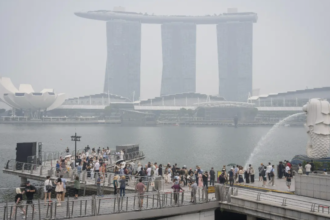
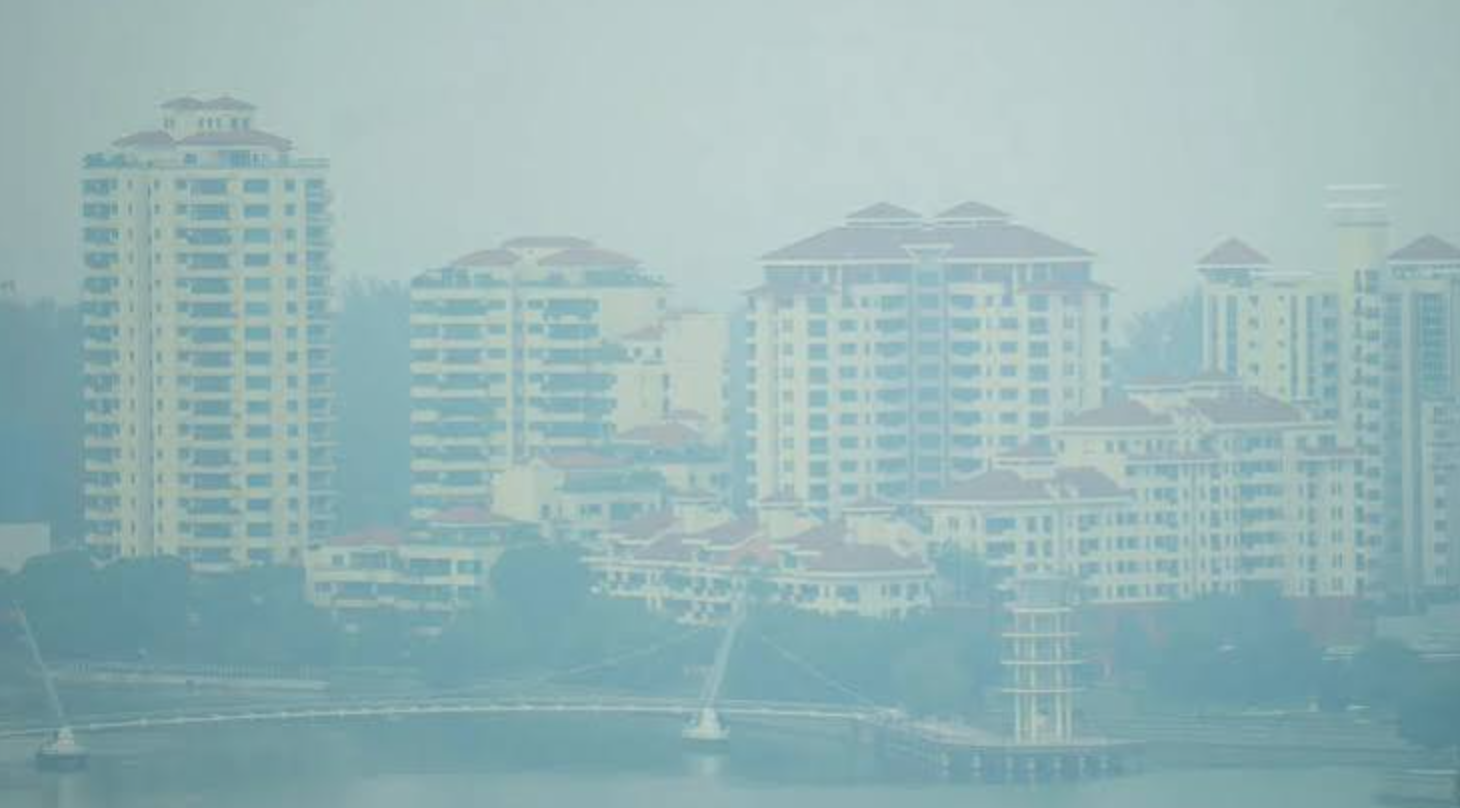
Haze is a mix of fine smoke particles that hang in the air and cut visibility. Transboundary haze is the version that drifts into Singapore from fires burning elsewhere in the region, which is why it tends to come in episodes that depend on wind direction and on how dry the season is. The smoke contains very small particles that can reach deep into the airways, and that is why haze is linked to flare-ups of asthma, irritated eyes and persistent coughs. MOH gave worsening air quality as the reason for activating the scheme, and did not give further details in the material used for this article.
How Long It Will Last
The published details do not state how long the scheme will run. That is worth keeping in mind. Schemes of this kind are normally tied to the haze situation and can be ended or extended by the authorities, so do not assume that the arrangement will still apply weeks from now. If you are planning a visit, check the MOH website or call the clinic first. MOH also updated the details of its announcement on 30 October 2026 for accuracy, which is a good reason to read the current version on the ministry’s website and not rely on a forwarded message.
Eligibility at GP Clinics and Polyclinics
The rules differ by type of provider, and this is where most of the confusion arises. At polyclinics, all Singapore Citizens are eligible. At participating GP clinics, the net is narrower, and only certain groups of Singapore Citizens qualify.
Groups Covered at Participating GP Clinics
At a PHPC, the eligible patients are Singapore Citizens who fall into one of these groups: children up to 18 years old; seniors aged 65 and above; people supported under Public Assistance; members of the Pioneer Generation or the Merdeka Generation; holders of CHAS cards, but only Blue or Orange cardholders; and holders of the Medical Fee Exemption Card. A person only needs to qualify under one of these routes.
The CHAS point needs care. The scheme covers Blue and Orange cardholders only, so a person with a different CHAS card colour should not assume that they are included. If you hold a CHAS card, check the colour on the card itself before you go.
Everyone at the Polyclinic
For polyclinics the rule is simpler: every Singapore Citizen is eligible, whatever their age or card status. That makes the polyclinic the more straightforward option for an adult aged between 19 and 64 who has no Public Assistance, Pioneer Generation, Merdeka Generation, CHAS or Medical Fee Exemption status. Such a person would not qualify at a GP clinic under the groups listed, but would at a polyclinic.
Groups the Scheme Does Not Name
The information published names Singapore Citizens only. It does not list permanent residents, long-term pass holders, work pass holders or other groups. That does not mean they are definitely excluded in every case, but it does mean this article cannot say that they are included. Anyone who is not a Singapore Citizen should check with MOH or the clinic before assuming that the cap applies, and should ask for the full fee in advance.
A Few Household Examples
Consider how the rules play out across one family. A nine-year-old child who is a Singapore Citizen can be seen at a participating GP clinic and would be eligible. Her grandmother, aged 70, also qualifies at a GP clinic on the strength of her age, and if she belongs to the Pioneer Generation or the Merdeka Generation she would fall under the lower S$5 ceiling. The child’s father, a working adult who is a Singapore Citizen with no listed status, would not be on the GP clinic list but would qualify at a polyclinic.
This pattern has a practical consequence. A parent with a child and a father with a cough may need to go to different places to use the scheme, so it pays to think about who is sick before choosing where to go. If everyone in the household is ill, a polyclinic can see all citizens under one roof, though waiting times at polyclinics can be long when many people are unwell at once.
The table below summarises who qualifies where.
| Who you are | Participating GP clinic (PHPC) | Polyclinic |
| Singapore Citizen aged 18 or below | Eligible | Eligible |
| Singapore Citizen aged 65 and above | Eligible | Eligible |
| Singapore Citizen on Public Assistance, Pioneer Generation or Merdeka Generation | Eligible | Eligible |
| Singapore Citizen with a Blue or Orange CHAS card, or a Medical Fee Exemption Card | Eligible | Eligible |
| Other Singapore Citizen adults | Not listed as eligible | Eligible |
| Other groups, such as non-citizens | Not listed; check with MOH | Not listed; check with MOH |
Caps per Visit and the Conditions Covered
Eligibility tells you whether you can use the scheme. The caps tell you how much you will pay, and the list of conditions tells you which visits count. Both matter, because the subsidy does not apply to every reason for seeing a doctor.
What Each Group Pays at Most
There are three levels. Public Assistance cardholders pay S$0. Seniors in the Pioneer Generation and the Merdeka Generation pay no more than S$5. Other eligible Singapore Citizens pay no more than S$10. These are caps on the amount you pay out of pocket for a visit about a covered haze-related condition, so the correct way to describe them is as a ceiling per visit for covered conditions, and not as a flat fee.
| Group | Most you pay out of pocket |
| Public Assistance cardholders | S$0 |
| Pioneer Generation and Merdeka Generation seniors | No more than S$5 |
| Other eligible Singapore Citizens | No more than S$10 |
A ceiling means that the amount could be lower than the cap. Whether it is lower depends on the clinic’s charges and on any other subsidies the patient already receives, and the sheet does not give details on that. If a patient’s usual bill is below the cap, there is no reason to expect to pay more than the usual bill.
Here is an illustration with invented round numbers, not real clinic prices. Suppose a clinic visit for a covered condition would normally cost S$40 after all other subsidies. For an eligible citizen who is not in a special group, the cap would mean paying no more than S$10, and for a Public Assistance cardholder the same visit would cost S$0. Real bills vary by clinic and by what is done during the visit, so ask the clinic for an estimate.
Reading the Cap Alongside Other Subsidies
Many patients already receive support through other schemes, such as CHAS at GP clinics or the standard subsidies at polyclinics. The material for this article does not explain how those arrangements interact with the haze cap, and it would be wrong to guess. The safe approach is to ask the clinic to explain, in plain terms, what you will be charged for the visit and how your cards and statuses have been applied. Keep the receipt, because it shows what was charged and helps if you need to query it later.
The Conditions That Count
The scheme covers allergic rhinitis, asthma, bronchitis, conjunctivitis, chronic obstructive pulmonary disease (COPD), upper respiratory tract infection, and the complications of these conditions. Allergic rhinitis is the stuffy, sneezy reaction that many people know as hay fever. Conjunctivitis is an inflamed, red or itchy eye. Upper respiratory tract infections include the common cold and similar infections of the nose and throat.
The list reads like a roll call of what haze tends to aggravate: the nose, the throat, the lungs and the eyes. If you visit for something unrelated, such as a sprained ankle or a stomach upset, the haze cap should not be expected to apply. Mixed visits can be awkward. If you see a doctor for a covered cough and also ask about an unrelated problem, ask the clinic how the visit will be treated before the consultation begins.
Why the Phrase “Covered Conditions” Matters
The cap is tied to the condition and not to the day or the air quality. Two people can walk into the same clinic on the same afternoon, and only the one with a covered condition benefits from the cap. Clinic staff and the doctor decide whether the visit qualifies, based on the diagnosis and the scheme rules. Do not be surprised if a clinic asks questions about your symptoms before confirming the charge. That is how they check that the visit fits the scheme.
Using the Scheme at the Clinic and Avoiding Scams
Knowing the rules is half the job. The other half is the practical business of turning up with the right items and asking the right questions. The steps below are general suggestions, and each clinic may run its own process.
Before You Leave Home
Bring your NRIC, because the clinic needs to confirm that you are a Singapore Citizen and to check any status linked to your identity. If you hold a CHAS card or a Medical Fee Exemption Card, bring it too. Seniors should have their identity card ready, since the Pioneer Generation and Merdeka Generation statuses are attached to the person.
If you are going to a GP clinic, check that it participates. Look for the PHPC decal or the HSS poster at the entrance or the registration counter, or check the list on the MOH website. If you are unsure, a quick phone call before you travel saves a wasted trip. Polyclinics all participate, so that check is only needed for GP clinics.
At the Counter and in the Consultation
Tell the clinic at registration that you are there about a haze-related problem and that you would like to use the Haze Subsidy Scheme. Ask, before treatment, whether your visit qualifies and what you are likely to pay. That is a general precaution that applies to any clinic, not a rule of the scheme. It avoids surprises at the payment counter, and clinics are used to the question.
For parents with young children, bring the child’s identity document if the child has one, and be ready to say what symptoms the child has. For elderly relatives, it helps for a family member to come along so that the doctor can hear the full picture, especially if the senior takes regular medication.
If the Clinic Says You Are Not Eligible
Sometimes a clinic will tell you that you do not qualify, either because it does not take part, because your status is not on the list for GP clinics, or because the problem is not a covered condition. Stay polite and ask which of the reasons applies. If the answer is that GP clinics are limited to certain groups, the polyclinic is the natural alternative for a Singapore Citizen. If you think a mistake has been made, call the MOH hotline at 6325 9220 or check the ministry’s website, instead of arguing at the counter.
Scam Warning
MOH has warned about scams. The ministry says it will only ask for verification through official channels. If you receive an email claiming to be from MOH and you are unsure whether it is real, call the MOH hotline at 6325 9220. Do not click links, reply with personal details or transfer money because of a message that mentions the haze subsidy.
A few general habits help. Real subsidies are applied at the clinic when you are treated, so a message that asks you to pay a fee in advance to claim a haze subsidy should immediately raise your suspicions. Be wary of urgent language, unfamiliar sender addresses and requests for banking details or one-time passwords. Elderly family members are often targeted, so it is worth telling them about the hotline number and asking them to check with a relative before responding to unexpected messages.
Protecting Health When the Air Is Poor
A subsidy makes treatment cheaper, but the better outcome is to avoid getting sick at all. The following is general information, not medical advice, and anyone with a chronic condition should follow the guidance of their own doctor.
Reducing Exposure
Start by treating haze as a daily condition to monitor, not a one-off event. Check the air quality readings published by the National Environment Agency before planning outdoor activities, and adjust your plans if conditions are poor. This article does not quote any readings, because they change through the day.
When the air is unhealthy, limit strenuous outdoor activity, such as running, cycling or sports training, because heavy breathing draws more polluted air deep into the lungs. Keep windows and doors closed when the air outdoors is poor, and run air-conditioning on a recirculating setting if you have it. Spend time in indoor spaces with clean air where you can, and consider moving exercise indoors until conditions improve.
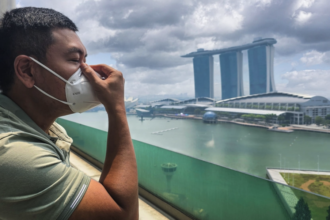
Masks are a common question. N95 respirators can reduce the amount of fine particles you breathe in, but only if they fit snugly against the face. A loose mask, or a surgical mask that leaves gaps at the sides, gives much less protection. They can also feel uncomfortable, and people with heart or lung conditions should ask their doctor before wearing one for long periods, since breathing through a respirator takes more effort. Children, whose faces are smaller, often cannot get a proper fit from adult sizes.
Looking After People With Asthma or Lung Disease
If you or a family member has asthma, keep reliever and controller medication within easy reach and make sure it has not expired. Follow your doctor’s action plan, and do not stop taking regular medication because the air seems better one day. People with COPD, heart disease or other chronic conditions are often more sensitive to poor air and should be careful to rest and to watch for warning signs.
See a doctor if symptoms are severe or getting worse. Difficulty breathing, chest tightness, a persistent wheeze or a cough that does not settle are reasons to seek care promptly and not to wait for a subsidy question to be resolved. In an emergency, go to the nearest hospital emergency department or call for an ambulance.
Practical Habits at Home
Small habits add up. Wash your face and rinse your eyes with clean water after a long spell outdoors if they feel irritated, and avoid rubbing them. Drink water, since dry throats make coughs worse. Avoid burning incense or candles indoors on hazy days, as they add to indoor particles, and keep air filters or air-conditioner filters clean if you use them. Check on elderly neighbours and relatives who live alone, because older people may not realise how much the air is affecting them.
What Employers Can Do
Employers have a role too. Allow staff with respiratory symptoms to take sick leave without pressure, and consider flexible arrangements such as working from home where the job allows it. Outdoor workers, such as those in construction, cleaning or delivery, are exposed for longer, so schedule heavy tasks for periods when the air is better and provide rest breaks in clean, sheltered areas. Remind staff that they can use the scheme if they are eligible and that a short consultation is better than struggling through a bad cough. Check MOM guidance for current workplace expectations.
Final Thoughts: Where to Start if You or a Relative Need Care
Haze episodes tend to stress the households that have the least slack: families with young children, older people on fixed incomes, and those already managing a chronic lung condition. For them, a cap of S$0, S$5 or S$10 can be the difference between going to the doctor early and putting it off until a cough turns into something worse. Early care is usually cheaper, in money and in discomfort, than waiting.
If someone in your household develops a cough, itchy eyes or wheezing that you think is linked to the haze, follow a simple order. First, judge how serious it is. Severe breathlessness or chest pain calls for emergency care straight away, without any thought of subsidies.
Second, work out whether the person is a Singapore Citizen and which group they belong to. Children up to 18, seniors aged 65 and above, and holders of Public Assistance, Pioneer Generation, Merdeka Generation, CHAS Blue or Orange or Medical Fee Exemption status can use a participating GP clinic. Any other Singapore Citizen can use a polyclinic.
Third, choose the place. A nearby GP clinic with a PHPC decal or an HSS poster is convenient if you qualify there, while a polyclinic is the safe choice for citizens who do not. Fourth, bring your NRIC and any relevant card, and ask before treatment whether the visit qualifies and what you will pay.
Fifth, keep the scam warning in mind. If a message claiming to be from MOH asks you to verify details, do not respond until you have called 6325 9220 to confirm. Finally, remember that the scheme has no stated end date in the information provided here, so check the MOH website for the current position if you are reading this some time after it began. For questions about your own health or your own eligibility, MOH, the clinic or your doctor can advise on your situation.
Frequently Asked Questions
1. When Did the Haze Subsidy Scheme Start?
The scheme took effect on 12 October 2026, a day after MOH announced it on 11 October. MOH has not stated how long it will run in the information available, so check the ministry’s website for the latest position.
2. Who Can Use the Haze Subsidy Scheme at a Polyclinic?
All Singapore Citizens are eligible at polyclinics, and all polyclinics participate. Other groups, such as non-citizens, are not listed, so check with MOH.
3. How Much Will I Pay at a GP Clinic Under the Scheme?
Public Assistance cardholders pay S$0, Pioneer Generation and Merdeka Generation seniors pay no more than S$5, and other eligible Singapore Citizens pay no more than S$10. These caps apply per visit for covered haze-related conditions.
4. Which Conditions Are Covered by the Haze Subsidy?
The scheme covers allergic rhinitis, asthma, bronchitis, conjunctivitis, COPD and upper respiratory tract infection, together with their complications. Visits for other problems are not covered by the cap.
5. How Do I Know if a GP Clinic Takes Part?
Look for the PHPC decal or the HSS poster at the clinic, or check the full PHPC list on the MOH website. If in doubt, call the clinic before you go.
6. Is an Email Asking Me to Verify My Haze Subsidy Really From MOH?
Treat it with caution. MOH says it will only request verification through official channels, and if you are unsure about an email claiming to be from MOH, you can call the MOH hotline at 6325 9220.