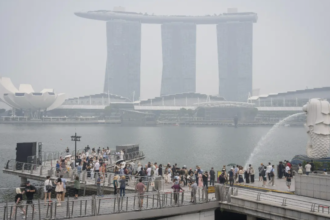
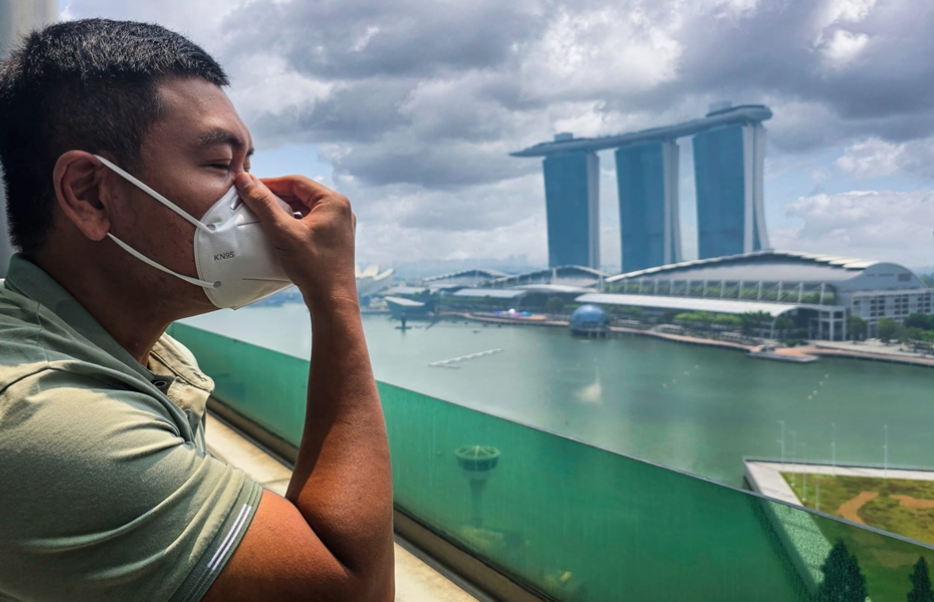
For about a fortnight, the air in at least one part of Singapore has been rated unhealthy, and many households are asking what that changes in practice. The answer depends on whether you are a parent packing a school bag, a delivery rider, a retiree who walks every morning, or a manager planning a team event.
In this article, we will explore the readings so far, how the bands and hourly figures work, and the health, school, workplace and mask arrangements that follow.
How the Episode Has Unfolded
The first breach in September
Air quality first moved into the unhealthy range on 4 September, the first time that had happened since October 2023. The National Environment Agency (NEA) began issuing daily haze advisories that same evening, and the advisories have continued since. Anyone who lived here during the 2013 and 2015 episodes will recognise the pattern of an early warning followed by a harder stretch, although each year’s smoke behaves differently and past years are only a rough guide.
A longer stretch from early October
Since 5 October, the 24-hour PSI has been in the unhealthy range in at least one region of the island. Little Big Red Dot described this as the longest such stretch of the year. The phrase “at least one region” deserves attention. Singapore reports air quality for five regions (north, south, east, west and central), and the overall figure that makes the headlines is normally the highest of them. A day can therefore be labelled unhealthy because a single region crosses the line while the others hover just below it.
The peak and the latest picture
The highest 24-hour reading so far was 192 in the central region on 9 October, between 5 pm and 8 pm. That is eight points short of the 200 line that separates unhealthy from very unhealthy, which is why the mask distribution and the tougher school measures described later have not yet been triggered. The same day brought the year’s highest hourly PM2.5 reading, 171 in the west at 2 am, a figure well above the range NEA calls elevated.
NEA’s update at 6 pm on 18 October put the 24-hour PSI between 109 and 192 across the island, all of it in the unhealthy range, with one-hour PM2.5 readings between 36 and 69. The forecast for 19 October was a 24-hour PSI of 101 to 190, unhealthy again. In plain terms, the cleanest region was only a little over the 100 line, the worst region was close to the top of the band, and the hourly figures show that some parts of the island touched the elevated PM2.5 range of 56 to 150 while others stayed below it.
Reading PSI Bands and Hourly PM2.5
Two numbers dominate every haze bulletin, and mixing them up is the most common mistake. Once you know which one answers which question, the daily advisories become much easier to follow.
The 24-hour PSI as a planning number
The Pollutant Standards Index is a 24-hour rolling average. Every hour, the figure is recalculated over the previous 24 hours, so it climbs and falls slowly. That makes it a good number for planning a day or a week, such as whether a school should hold outdoor lessons or whether a company should reschedule an outdoor shift. It also explains a common source of confusion. If a brisk wind clears the smoke at dawn, the PSI can remain high for much of the day because the smoky hours are still inside the average. The reverse is also true: a sudden plume in the evening will not push the PSI up at once, even though the air outside is unpleasant.
Readings below 101 are described as good or moderate. Once the figure reaches 101, the air is classed as unhealthy, and that band runs to 200. Above 200 is very unhealthy, and above 300 is hazardous.
Hourly PM2.5 for what to do in the next hour
For immediate decisions, such as whether to go for a run now, NEA points people to the hourly PM2.5 reading instead. PM2.5 refers to fine particles small enough to travel deep into the lungs, and the hourly figure responds quickly to changes in the smoke. A reading of 56 to 150 is described as elevated. The two numbers are meant to be used together: the PSI tells you what kind of day it is, and the hourly PM2.5 tells you what the next hour looks like.
| Reading | Label | What it triggers in practice |
| 24-hour PSI 101 to 200 | Unhealthy | Healthy people cut back on prolonged or strenuous outdoor exertion; schools avoid strenuous outdoor activity |
| 24-hour PSI 201 to 300 | Very unhealthy | N95 masks distributed to eligible residents; pre-schools stop outdoor and strenuous indoor activities |
| 24-hour PSI above 300 | Hazardous | MOE considers closing schools and postponing national exams if the next day’s forecast is in this band |
| Hourly PM2.5 56 to 150 | Elevated | Children, the elderly, pregnant women and people with chronic lung or heart disease avoid strenuous outdoor activity for the next hour |
Regional Readings and the Role of the Wind
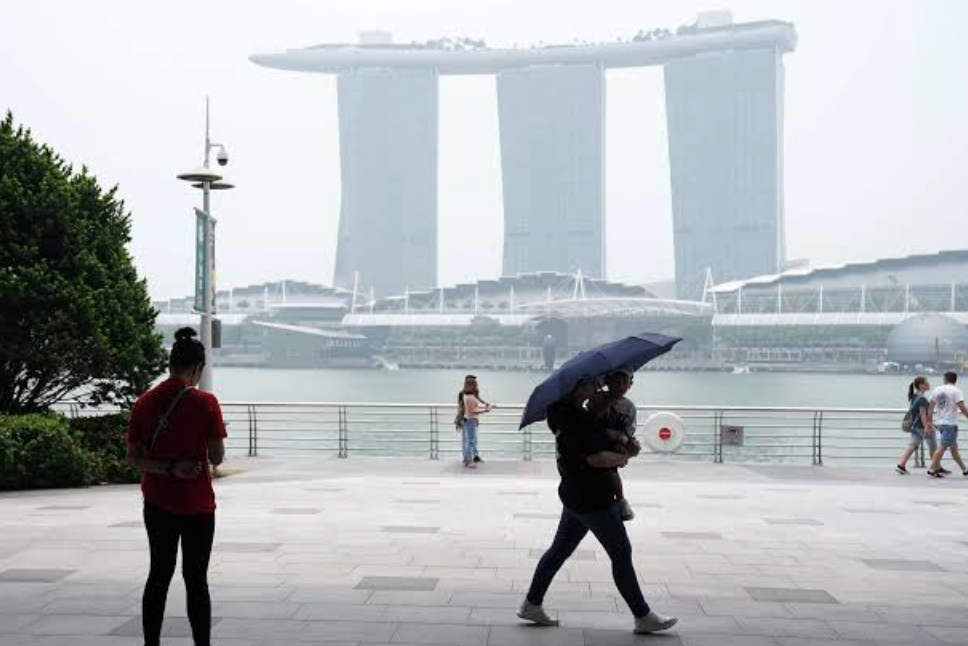
What the early-morning figures show
Two sets of 7 am readings reported by the media give a sense of how uneven the picture can be. On 10 October the figures were north 125, south 141, east 157, west 162 and central 176. By 14 October, according to The Star, citing The Straits Times, they were central 142, north 107, south 122, east 142 and west 145.
| Region | 10 October, 7 am | 14 October, 7 am | Change |
| North | 125 | 107 | Down 18 |
| South | 141 | 122 | Down 19 |
| East | 157 | 142 | Down 15 |
| West | 162 | 145 | Down 17 |
| Central | 176 | 142 | Down 34 |
Every region improved over those four days, and the central region improved most, yet every region still sat in the unhealthy band. The north was the cleanest on both mornings. Even so, the gap between the cleanest and the worst region was 51 points on 10 October and 38 points on 14 October, which is large
enough to change the advice a person should follow. If you live in the west and work in the north, the number on your commute may not match the number at your desk.
Where the smoke comes from
NEA attributes the haze to fires in Kalimantan and southern Sumatra, with the smoke carried towards Singapore on south-easterly winds. Dry conditions over parts of southern Sumatra and Kalimantan have helped the fires spread. Our companion article on the Transboundary Haze Pollution Act looks at the legal response to those fires, so this article stays with what happens in the air above us.
The outlook for the next few days
According to NEA’s update on 18 October, winds from the south had improved air quality, but smoke from Kalimantan kept drifting in. Some smoke from Sumatra might drift in on 19 October. On Tuesday 20 October, southeasterly or southerly winds and showers may reduce the smoke. From Tuesday night, however, the winds may turn east-southeasterly and bring Kalimantan smoke towards Singapore overnight. That is a useful reminder not to treat one clear afternoon as the end of the episode. Wind direction can change within hours, and showers clean the air only while they last. A practical habit is to look at the forecast for the coming night as well as the day, since smoke that arrives while people sleep can leave bedrooms stuffy by morning if the windows were open.
Health Advice for Different Groups
NEA’s advice for the unhealthy range is graduated by health status, and it is worth reading closely because it does not say the same thing to everyone. The agency also stresses that the effect on any person depends on their health, the PSI level, and the length and intensity of the time they spend outdoors. A short walk to the MRT station is a very different exposure from a two-hour football game. That is why the same reading can call for different choices in different households.
Healthy adults
Healthy people are advised to reduce prolonged or strenuous outdoor exertion. That does not mean staying all day indoors. A brisk walk to the bus stop, lunch at a nearby hawker centre or a few minutes at the playground is still reasonable for most healthy adults. What deserves rescheduling is the long run, the cycling session, the outdoor bootcamp and the multi-hour weekend game. If you enjoy exercise at the gym or the swimming complex, an indoor facility with air-conditioning is the sensible substitute for now.
Elderly people, pregnant women and children
This group is advised to minimise prolonged or strenuous outdoor exertion, and when the hourly PM2.5 is elevated, to avoid strenuous outdoor activity for the next hour. Grandparents who normally walk grandchildren to school or take them to the playground may want to shorten the outing and choose a covered or indoor alternative. Parents of young children should remember that children breathe faster than adults relative to their size, so a game of catch that feels easy to you may involve more exposure
for them. Pregnant women who have questions about their own situation should ask their obstetrician or polyclinic doctor, since general advice cannot cover every pregnancy.
People with chronic lung or heart disease
For people with conditions such as asthma, chronic obstructive pulmonary disease or heart disease, NEA advises avoiding prolonged or strenuous exertion, and avoiding strenuous activity for the next hour when PM2.5 is elevated. Practical habits matter here: keep reliever inhalers and regular medication within reach, follow the action plan your doctor has given you, and do not wait for symptoms to become severe before seeking advice. Wheezing, chest tightness, unusual breathlessness or a persistent cough are reasons to speak to a doctor. Anyone who is seriously short of breath or has chest pain should seek urgent medical care rather than wait for the air to improve.
Making the home air cleaner
General good practice during haze is to keep windows closed when readings are high, to use air conditioning in recirculation mode if you have it, and to use an air purifier in the room where the family spends most time. Cooking, burning incense, and smoking add their own particles indoors, so it is worth cutting back on them while the air outside is poor. Mopping and wet-wiping surfaces is better than sweeping, which raises dust again. If you have an air purifier, run it before bedtime as well, since sleeping hours make up a large share of the time at home. Remember that purifiers need their filters replaced on schedule, and a clogged filter does little.
Schools and Pre-Schools Under the Current Plan
Pre-schools
The Haze Task Force, led by NEA with 28 government agencies, announced its measures on 9 October. For pre-schools, the rule is firm and simple: if the PSI enters the very unhealthy range, above 200, they stop all outdoor activities and all strenuous indoor activities. Parents of toddlers and nursery children
should therefore expect quieter, calmer days at centres if the readings worsen, and should ask their centre how it will communicate changes.
Primary and secondary schools
For schools, the Task Force said classroom lessons continue, possibly in modified form, while outdoor activities are curtailed. The Ministry of Education (MOE) added, as reported by Mothership on 10 October, that lessons and national examinations continue in enclosed venues with air purifiers, and that all classrooms have air purifiers. When the forecast is unhealthy, schools avoid strenuous outdoor activity and avoid several hours of continuous exposure. In practice, that tends to mean physical education moved indoors or turned into lighter activity, recess and assembly arrangements adjusted, and outdoor co-curricular activities postponed or shifted.
Students who are unwell, or who have lung or heart conditions, are exempt from outdoor physical activity. Parents of children with asthma should tell the form teacher about the condition if they have not done so already, so that the exemption is applied without a fuss. For national examinations, an unwell student who cannot sit a paper may apply for Special Consideration through the school.
When schools could close
Closure is a last resort. The measures are designed so that children keep learning in a controlled indoor setting for as long as it is safe. MOE said it would consider closing schools and postponing national examinations if the next day’s 24-hour PSI forecast is hazardous, meaning above 300. Any closure decision would be announced around 8 pm the day before. That timing matters for working parents, because it leaves an evening, and not a morning, to arrange care. Since the highest reading so far is 192, a closure is not on the cards at the moment, but a household that has a back-up plan, such as a grandparent, a neighbour or leave that can be applied for at short notice, will be calmer if conditions worsen.
| Forecast or reading | What schools and pre-schools do |
| Unhealthy (101 to 200) | Classroom lessons continue; strenuous outdoor activity and long continuous exposure avoided; exemptions for unwell students |
| Very unhealthy (above 200) | Pre-schools stop all outdoor and strenuous indoor activities; schools continue classes with outdoor activities curtailed |
| Hazardous forecast (above 300) | MOE considers school closure and postponing national exams; decision announced around 8pm the day before |
Workplaces, Sport and Community Events
Outdoor and shift work
The Task Force announcements summarised here do not set out detailed rules for workplaces, so employers and workers should look to the Ministry of Manpower (MOM) and to their own company policies. In general, employers in Singapore have a duty under the Workplace Safety and Health framework to take reasonably practicable steps to protect workers, and that includes assessing the risk when air quality worsens. Sensible measures usually include more rest breaks, rotating people out of heavy outdoor tasks, giving suitable masks to those who must stay outside, and moving work indoors where possible. The details of MOM’s haze guidance have changed over the years, so check the ministry’s current advisory before assuming what applied in earlier episodes.
Workers who spend long hours outside, such as cleaners, construction workers, delivery riders and security officers, have the most exposure. If you are one of them and you feel unwell, raise it with your supervisor early, and ask your company what its haze procedure is before the readings climb.
Sport and fitness
Sport organisers and facility operators have been urged to consider modifying or suspending outdoor activities, including in non-air-conditioned facilities. That last phrase matters, because a covered court or an open-sided hall is still exposed to the same air. The effects are visible already. According to Little Big Red Dot, a running club cancelled several sessions in early October, and the Bay East Garden parkrun cancelled its 5km run on Saturday 10 October. If you coach a team, err on the side of caution when the hourly PM2.5 is elevated, because the harm from losing one training session is small compared with the risk to a child with undiagnosed asthma.
Office workers and event organisers
Office workers face the easiest situation, yet the commute and the lunch break still involve exposure. Plan lunch near the office, or order in on the worst days. If you cycle or walk to work, consider taking public transport for a few days, and if your employer allows flexible hours, a later start can avoid the heaviest early-morning smoke on days when the forecast says it will be thick. Organisers of weddings,
outdoor markets, school fairs and corporate days should set a decision point in advance, for example by agreeing that anything outdoors will be reviewed the evening before and again in the morning, and tell guests how the decision will be shared. A wedding with a clear indoor fallback and a message sent to guests the night before is far less stressful than one where everyone arrives to find the plan has changed. Small community groups, such as walking clubs and church or temple activities, can follow the same approach.
N95 Masks and Who Can Collect Them
When distribution begins
The Task Force plan ties mask distribution to the very unhealthy band. If the PSI enters the very unhealthy range, above 200, People’s Association (PA) grassroots organisations distribute N95 masks to eligible Singaporeans. The eligible group is described as those who are more vulnerable or who have limited means. Because the highest 24-hour reading so far has been 192, this scheme has not yet been activated, according to the figures reported.
Where to collect
Masks can be collected at vending machines at selected public transport hubs, at Social Service Offices and at PA venues. Family members or friends may collect on behalf of an eligible person by using that person’s NRIC. This is helpful for an elderly parent or a relative with a lung condition who should not be
queuing in poor air. If you expect to collect for someone, note their NRIC details securely and only use them for this purpose. Because the list of exact locations and the eligibility details can change, check the official haze website or the PA before heading out.
Using an N95 properly
An N95 respirator is designed to filter fine particles, but only when it forms a good seal against the face. Beards and gaps at the nose bridge reduce protection. Ordinary surgical masks and cloth masks are not designed to filter out most fine smoke particles, so they offer less protection against haze. Respirators are also harder to breathe through, and people with heart or lung conditions should ask their doctor before wearing one for long stretches. Children’s faces are smaller, so adult-sized respirators may not fit them well, and a child who needs to be outdoors is better served by limiting the time outside than by a loose mask.
A Daily Routine for the Coming Days
A simple routine works better than constant anxiety. In the morning, check the latest PSI and the forecast on one trusted source, then check the hourly PM2.5 before any planned exercise or outdoor errand. NEA lists the haze website, its main website, the weather website, and the myENV app as the places to look, and it is better to pick one or two and stick with them than to scroll through social media posts of uncertain origin.
At midday, decide whether outdoor plans make sense for the afternoon. If you have a child with asthma, an elderly parent living with you or a pregnant family member, apply the stricter advice for their group rather than the one for healthy adults. In the evening, especially if schools are involved, look out for MOE messages around 8 pm, though they will matter only if the forecast turns hazardous.
Households with older relatives should agree on who checks in on them. A neighbour or a grandchild who phones once a day and asks how the breathing is can catch a problem early, and it costs nothing.
Keep the practical items ready before you need them: reliever medication, enough prescriptions to last, a few N95 masks if you already own them, a clean air purifier filter, and a plan for childcare in case schools close. Do not rely on guesswork about the weather. If showers arrive, welcome them, but remember that the winds may carry fresh smoke back overnight, as the 18 October update warned.
Employers and school parents’ groups can help by sharing a single message at a fixed time each day, so that people are not each interpreting the numbers differently.
Finally, treat this as a stretch that may last longer than expected. Little Big Red Dot called the current run the longest this year, and that means habits you can sustain, such as indoor workouts and early checks of the figures, are more useful than a single burst of caution.
Frequently Asked Questions
What PSI is considered unhealthy in Singapore?
A 24-hour PSI of 101 to 200 is in the unhealthy range. Above 200 is very unhealthy, and above 300 is hazardous. Readings below 101 are good or moderate.
Will schools close if the haze gets worse?
MOE said it would consider closing schools and postponing national examinations only if the next day’s 24-hour PSI forecast is hazardous, which means above 300. Any closure decision would be announced around 8 pm the day before. Until then, lessons continue with air purifiers and with outdoor activities curtailed.
How can I get an N95 mask during haze?
Masks are planned for eligible Singaporeans if the PSI enters the very unhealthy range, above 200. They are to be handed out through PA grassroots organisations, with collection at vending machines at selected transport hubs, Social Service Offices and PA venues. A family member or friend can collect using the eligible person’s NRIC.
Is it safe to jog outdoors when the PSI is unhealthy?
NEA advises healthy people to reduce prolonged or strenuous outdoor exertion in the unhealthy range. A long run falls into that category, so an indoor session is the safer choice. Children, the elderly, pregnant women and people with heart or lung disease should be more careful still.
Where can I check the haze reading in Singapore?
NEA lists its haze website, its main website, the weather website, and the myENV app. Check the 24-hour PSI for the overall picture and the hourly PM2.5 for what to do in the next hour.
Will the haze clear this week?
It is hard to say. NEA’s update on 18 October said showers and southerly winds on 20 October may reduce the smoke, but winds could turn east-southeasterly from Tuesday night and bring Kalimantan smoke back overnight. Check the latest forecast each morning.