
Lifestyle
AI Powered Home Robots in 2026: Smart Companions for Everyday Living


The year 2026 marks a major turning point in how we interact with technology at home. We have officially moved beyond static smart speakers and single purpose cleaning robots. Today, a new generation of AI-powered home robots is stepping into our living spaces capable of moving, learning, assisting, and even empathizing.
These machines represent the rise of Physical AI: intelligent robots that understand their surroundings, adapt to human behavior, and actively support daily life. From folding laundry and managing smart homes to monitoring loved ones and educating children, AI Home Robots in 2026 are redefining modern living.
In this guide, we explore the most influential robotic companions shaping households this year—and what to consider before bringing one home.
1. The All-Purpose Household Assistant: 1X NEO
Often described as the breakthrough moment for consumer robotics, 1X NEO has become one of the most talked-about humanoid robots of 2026.
What Makes NEO Stand Out
Designed specifically for human environments, NEO moves naturally through homes and handles everyday tasks with impressive precision. Its soft, compliant exterior reduces risk, making it safe around children and pets.
Everyday Capabilities
NEO can load and unload dishwashers, organize clutter, tidy rooms, and even fold clothes—tasks once considered far beyond consumer robotics.
Assisted Learning Mode
When NEO encounters a task it hasn’t mastered, a remote human operator can briefly guide it using VR-based teleoperation. The robot then learns from the experience, improving future performance autonomously.
Why Homeowners Love It
NEO feels less like a machine and more like a helpful household presence bridging the gap between automation and true assistance.
2. The Mobile Smart Home Companion: Samsung Ballie (2026 Edition)
Samsung’s Ballie has evolved from a futuristic concept into a fully realized home companion.
A Moving Control Center
Ballie follows users throughout the house, projecting information where it’s needed most. In the kitchen, it displays recipes. During workouts, it shows health metrics and guided routines.
Home Security & Family Care
While you’re away, Ballie patrols your home, monitoring pets and elderly family members. If it detects unusual behavior, falls, or distress, it instantly sends alerts with live video access.
Deep Smart Home Integration
As the mobile core of the SmartThings ecosystem, Ballie manages lighting, temperature, appliances, and routines through voice, visuals, and contextual awareness.
AI Home Robot Comparison (2026)
| Robot Name | Category | Key Strength | Ideal For |
| 1X NEO | Humanoid | Physical household tasks | Busy households |
| Samsung Ballie | Rolling AI Hub | Smart home control & security | Tech-focused homes |
| Miko 3 | Social / Educational | Child learning & emotional support | Families with kids |
| Tesla Optimus (Gen 3) | Humanoid | Heavy lifting & durability | Large homes & outdoor tasks |
| Eufy X10 Pro Omni | Hybrid Vacuum | Advanced floor care | Low-maintenance lifestyles |
3. The Learning & Emotional Companion: Miko 3
For families with children, Miko 3 has grown far beyond a simple educational toy.
Intelligent Learning Support
Miko uses advanced conversational AI to help with homework, language learning, and creative storytelling. Lessons adapt dynamically to a child’s interests and progress.
Emotional Awareness
By analyzing facial expressions and vocal cues, Miko can sense frustration, boredom, or excitement responding with encouragement, games, or calming activities when needed.
A Trusted Digital Friend
Parents appreciate Miko’s balance of education, emotional intelligence, and safe interaction, making it a valuable addition to family life.
4. The Heavy-Duty Helper: Tesla Optimus (Consumer Alpha)
Tesla has begun limited consumer availability of its Optimus humanoid robot, bringing industrial-grade capability into residential settings.
Advanced Navigation & AI
Powered by Tesla’s Full Self-Driving neural systems, Optimus can map homes accurately and move efficiently through complex environments.
Practical Strength
Optimus excels at physically demanding tasks carrying groceries, moving furniture, handling yard work, and supporting large properties.
Cost & Vision
Tesla’s long-term goal is affordability, aiming for a price comparable to a compact car, with early targets under $25,000 to reshape domestic labor.
Key Factors to Consider Before Buying a Home Robot
1. Privacy & Data Security
Modern home robots rely on cameras, microphones, and constant connectivity. Look for brands that prioritize on device AI processing and transparent data policies to protect household privacy.
2. Safety by Design
Humanoid robots can be heavy and powerful. Soft materials, pinch-resistant joints, and advanced collision detection are essential especially in homes with children or pets.
3. Autonomous Intelligence
The best robots in 2026 are agentic. They don’t just follow commands they notice situations, anticipate needs, and politely ask before taking action.
Final Thoughts
What once belonged to the realm of science fiction has now become an everyday reality. In 2026, AI-powered home robots have moved beyond laboratories and digital screens, seamlessly integrating into our homes and becoming active participants in our daily routines.
Whether it’s the versatility of 1X NEO, the connected intelligence of Samsung Ballie, or the emotional learning support of Miko 3, these robots are transforming homes into smarter, safer, and more supportive environments.
By welcoming these emerging technologies, we’re not just automating chores, we’re reclaiming time, reducing stress, and creating space for what matters most: family, creativity, and meaningful living.

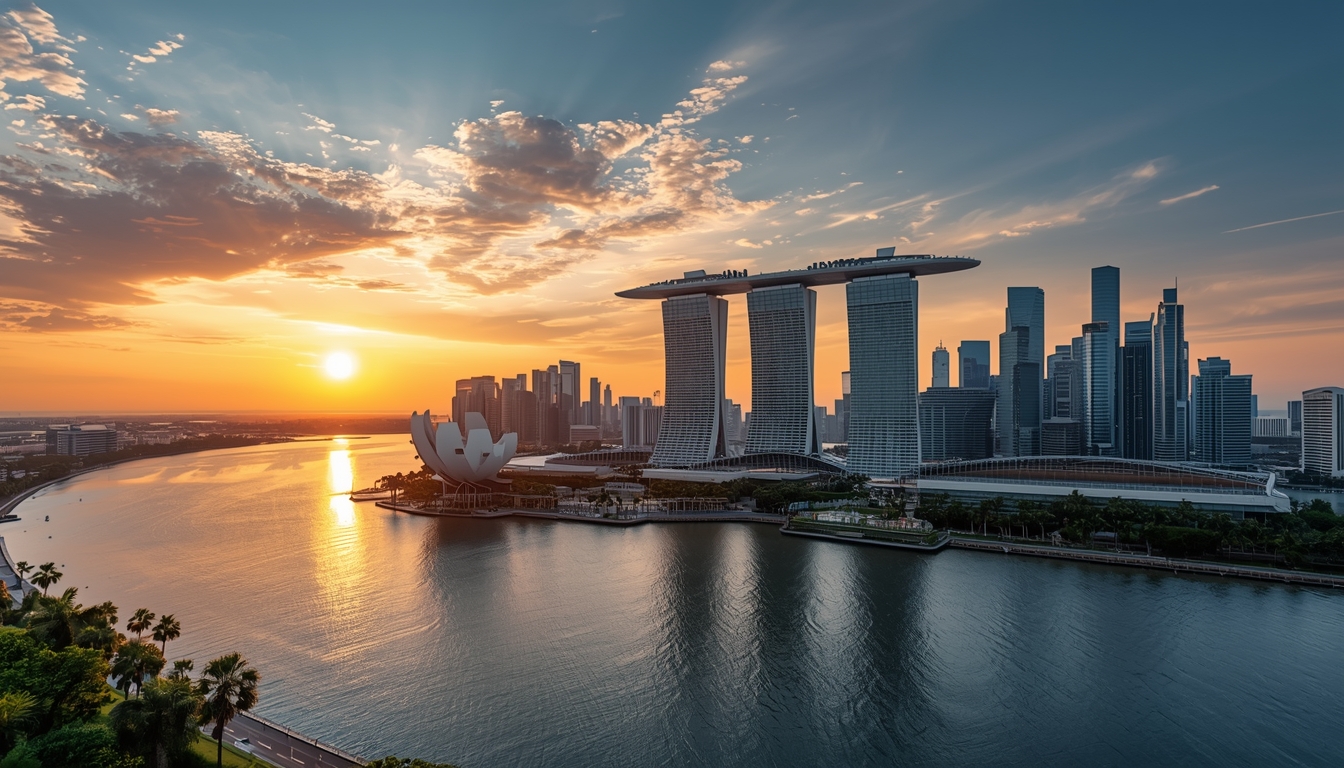
Elite Living in Singapore 2026 is no longer just about owning a penthouse in a prime district. It’s about intelligent homes sustainable architecture global connectivity and curated experiences. Singapore has always been known for stability and forward planning. Now it’s stepping into a new chapter where luxury meets technology in ways we couldn’t imagine a decade ago.
In the first quarter of 2026 alone demand for ultra-premium residences has surged. Investors entrepreneurs and family offices are choosing Singapore not just for safety but for lifestyle innovation. Simply put Elite Living in Singapore 2026 blends comfort privacy and future-ready infrastructure into one seamless experience.
Let’s explore how this transformation is shaping the skyline and the lives of those who call it home.
A New Definition of Elite Living in Singapore 2026
Elite Living in Singapore 2026 has evolved beyond marble floors and panoramic views. Today it reflects intelligence environmental responsibility and social prestige. Buyers are no longer impressed by size alone. Instead they’re asking: Is the home energy efficient? Does it integrate AI? Is it part of a thriving luxury ecosystem?
If you’re exploring ways to maximize compact spaces don’t miss our detailed guide on Singapore HDB Flat Interior Design Ideas for Small Apartments and Smart Living where we share practical tips and modern solutions tailored for efficient urban homes.
Smart Residences and AI Integration
Technology is at the heart of Elite Living in Singapore 2026. High-end developments now feature:
- AI-powered climate control systems
- Facial recognition entry
- Predictive home maintenance alerts
- Voice-activated lighting and security
- Automated parking systems
Homes learn residents’ habits. For instance lighting adjusts automatically based on mood preferences. Refrigerators track grocery usage. Security systems send real-time global alerts. It’s convenience taken up a notch.
Moreover property developers are collaborating with global tech firms to ensure cybersecurity remains airtight. After all elite homeowners expect discretion.
Sustainable Prestige Developments
Sustainability isn’t optional anymore it’s essential. Many luxury projects are now Green Mark Platinum certified. Developers are investing heavily in:
- Solar-integrated facades
- Rainwater harvesting systems
- Energy-efficient glass panels
- Carbon footprint monitoring apps
Elite Living in Singapore 2026 embraces eco-conscious design without compromising sophistication. In fact sustainability has become a status symbol. Living green is living smart.
Prime District Transformations
Districts 9, 10, and 11 remain highly desirable. However Marina Bay and the Greater Southern Waterfront are quickly becoming icons of modern affluence.
Waterfront and Sky Residences
Sky villas with private pools and double-volume ceilings are redefining vertical living. Meanwhile waterfront mansions offer direct marina access for yacht owners. These properties combine scenic beauty with urban convenience.
Buyers today want both tranquility and connectivity and Singapore delivers.
Integrated Luxury Communities
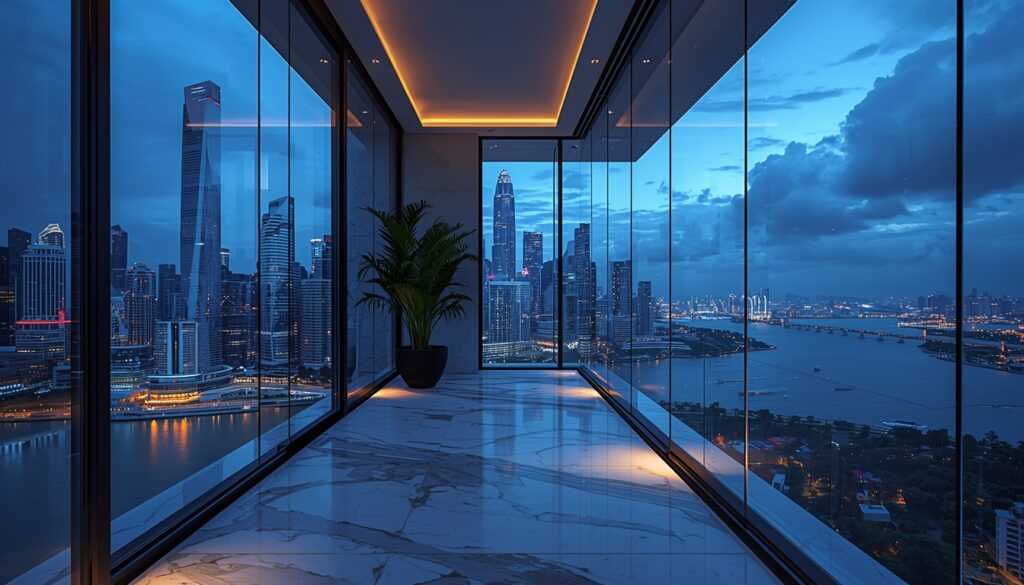
Mixed-use developments are reshaping Elite Living in Singapore 2026. Imagine stepping out of your residence directly into:
- Michelin-starred restaurants
- Designer boutiques
- Private medical suites
- Members-only clubs
These integrated spaces create a city within a city concept. Residents rarely need to travel far for anything.
Investment Confidence and Global Appeal
Singapore’s political stability and transparent legal system continue to attract international investors. Despite global uncertainty property here remains resilient.
Key reasons include:
- Strong currency stability
- Clear property ownership laws
- Efficient tax structure
- Robust rental demand
As a result Elite Living in Singapore 2026 isn’t just about lifestyle—it’s also a strategic wealth preservation tool.
Lifestyle, Wealth and Innovation in Elite Living in Singapore 2026
While architecture sets the stage lifestyle defines the experience. Elite Living in Singapore 2026 focuses on holistic well-being seamless services, and digital wealth management.
Private Clubs and Bespoke Services
Personalization is everything. Luxury residences now offer:
- 24/7 concierge teams
- Private chefs on request
- Chauffeur booking services
- Event planning assistance
Exclusive clubs provide networking spaces for global leaders. These venues aren’t just social hubs—they’re business ecosystems.
Residents don’t chase experiences anymore. Experiences come to them.
Wellness-Centric Architecture
Health has become central to property design. Developers are integrating wellness features directly into residential towers.
Biophilic Design Principles
Biophilic design connects residents with nature. Features include:
- Vertical gardens
- Indoor waterfalls
- Natural ventilation corridors
- Sky terraces with native plants
Research shows that natural elements reduce stress and enhance productivity. Elite Living in Singapore 2026 leverages these principles extensively.
Smart Air and Water Systems
Air purification systems now remove allergens and pollutants automatically. Water filtration systems ensure mineral-balanced drinking water straight from the tap.
In a dense urban environment, these features aren’t luxuries—they’re necessities.
Education and Family-Oriented Luxury
Affluent families prioritize education. Singapore hosts some of the world’s leading international schools.
Proximity to top institutions significantly boosts property value. Moreover, the country’s low crime rate reassures parents.
Elite Living in Singapore 2026 supports family life with:
- Private playgrounds
- Learning pods
- Child-safe smart locks
- Dedicated study lounges
It’s luxury with long-term vision.
Digital Wealth and Property Tech
Blockchain technology is gradually entering high-end real estate. Secure digital contracts and tokenized property investments are gaining traction.
Benefits include:
- Faster cross-border transactions
- Transparent ownership records
- Reduced administrative costs
This innovation reinforces Singapore’s position as a global financial hub.
Security and Privacy Advancements
Privacy remains paramount. Elite developments now include:
- Biometric access elevators
- Soundproof walls
- Private lift lobbies
- Encrypted communication systems
For ultra-high-net-worth individuals, peace of mind is priceless. Elite Living in Singapore 2026 ensures that security evolves alongside technology.
Frequently Asked Questions
1. What makes Elite Living in Singapore 2026 different from previous years?
The integration of AI sustainability and holistic wellness features sets 2026 apart. Luxury now emphasizes intelligence and environmental responsibility.
2. Are foreigners allowed to purchase luxury property?
Foreigners can buy condominiums freely though landed properties require special approval.
3. Is luxury property still a good investment in 2026?
Yes. Singapore’s stable economy and strong legal framework support long-term value growth.
4. Which districts are most popular for elite homes?
Districts 9, 10, 11, Marina Bay and the Greater Southern Waterfront lead the market.
5. How important is sustainability in high-end developments?
It’s crucial. Green certifications significantly enhance both property value and buyer appeal.
6. Are smart home systems secure?
Developers partner with global cybersecurity firms to ensure high-level data protection.
7. What lifestyle amenities are commonly included?
Concierge services private clubs wellness centers, sky gardens and smart security systems are standard in most elite developments.
Conclusion: A Vision Beyond 2026
Elite Living in Singapore 2026 reflects more than architectural excellence. It embodies innovation sustainability and global sophistication. As technology advances and environmental priorities grow Singapore continues to lead with clarity and purpose.
Looking ahead we can expect even deeper AI integration expanded waterfront projects and stronger digital property frameworks. Yet one thing remains constant: Singapore’s commitment to quality and forward-thinking urban design.
For investors families, and global citizens the message is clear. The future of refined urban living isn’t coming it’s already here.
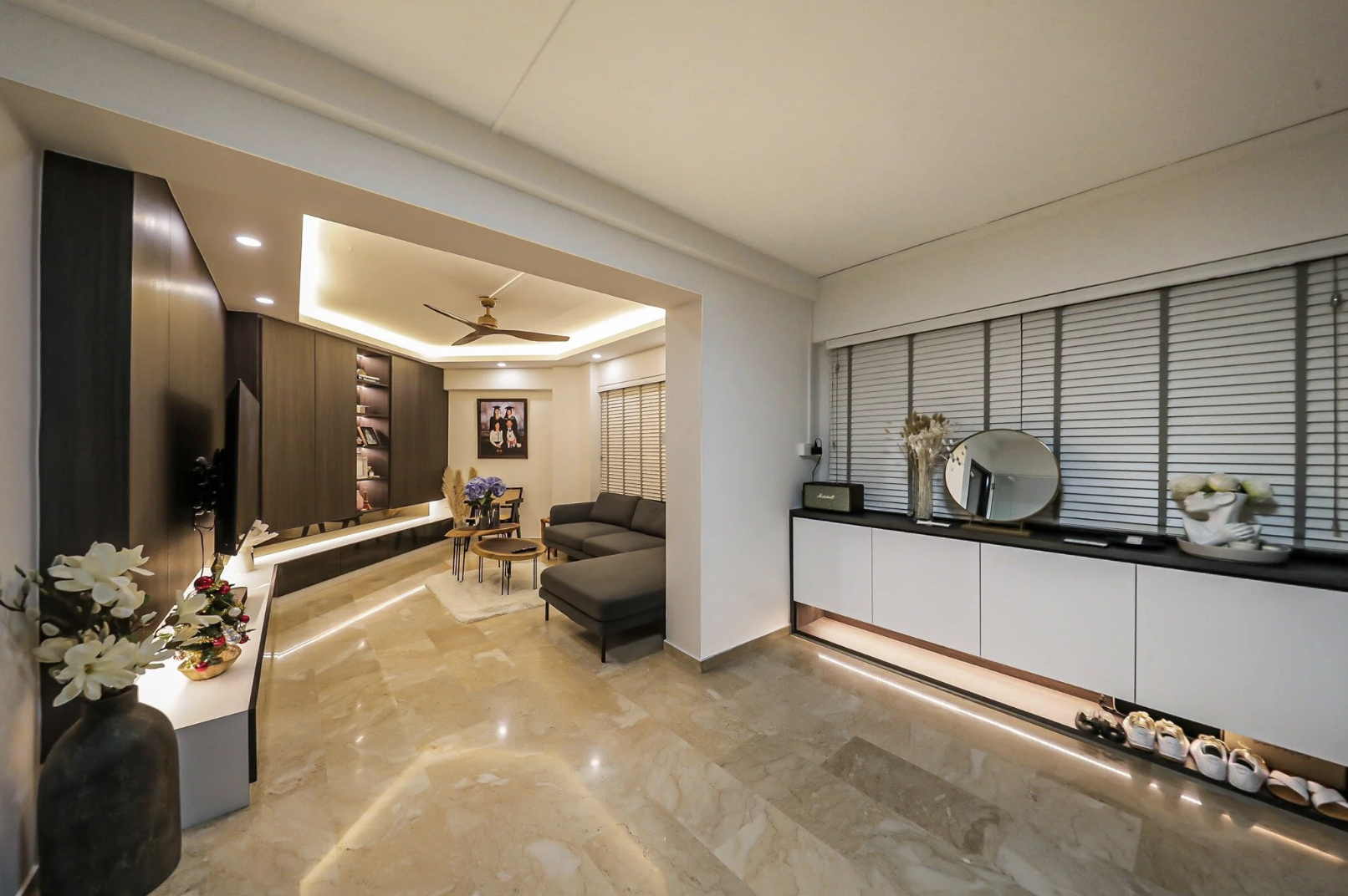
Designing a small home in Singapore can feel tricky. HDB flats come with fixed layouts tight rooms and strict rules. Still with the right Singapore HDB flat interior design ideas for small apartments and smart living you can turn even a modest unit into a stylish comfortable and very practical home.
This guide walks through clear simple strategies to help you plan design and style your HDB flat. You’ll find layout ideas storage solutions and smart home tips tailored to Singapore living. Whether you’re a young couple in a BTO a family in a resale flat or downsizing in your golden years these ideas can help you get more out of every square metre.
Understanding the Unique Challenges of Singapore HDB Flats
Common HDB Layouts and What They Mean for Design
Most Singapore HDB flats share a few key traits: compact rooms standardised bathrooms and fixed locations for structural walls and windows. Knowing your layout is the first step to smarter design.
Stay ahead of the latest SG trends in home design with practical, space-savvy ideas perfect for modern Singapore living.
Common HDB layouts include:
- 2-room flexi: Usually suitable for singles or seniors.
- 3-room flats: Compact but workable for couples or small families.
- 4-room flats: The sweet spot for many families.
- 5-room and executive units: Larger, but still need careful planning.
Each layout affects how you use space:
- Long, narrow living rooms: Great for open-concept ideas but prone to clutter.
- Bedrooms in a row: Good for families with young kids, harder for privacy.
- Enclosed kitchens: Better for heavy cooking but can feel cramped.
When you explore Singapore HDB flat interior design ideas for small apartments and smart living, always start by sketching your existing layout. Mark windows doors columns and HDB-restricted areas. This helps you see what’s possible and what must stay.
Key Constraints: Space Light and Regulations
HDB flats face three big constraints:
- Limited floor area
You can’t change your flat size but you can control how it feels. Overbuilt carpentry and oversized furniture quickly make an HDB home feel tight. - Natural light and ventilation
Many flats get light from only one or two sides. If you block windows with tall furniture or dark curtains rooms feel smaller and stuffier. - HDB regulations and safety
You can’t hack structural walls random beams or key wet areas without approval. Flooring, windows, and some electrical works also follow rules. Always check official HDB renovation guidelines on the HDB website before hacking or rewiring.
Instead of fighting these limits, design around them. Keep layouts simple use light colours and position furniture to let air and light flow. With smart planning, even a small, rule-bound flat can feel open and calm.
Planning Your HDB Interior Design from the Ground Up
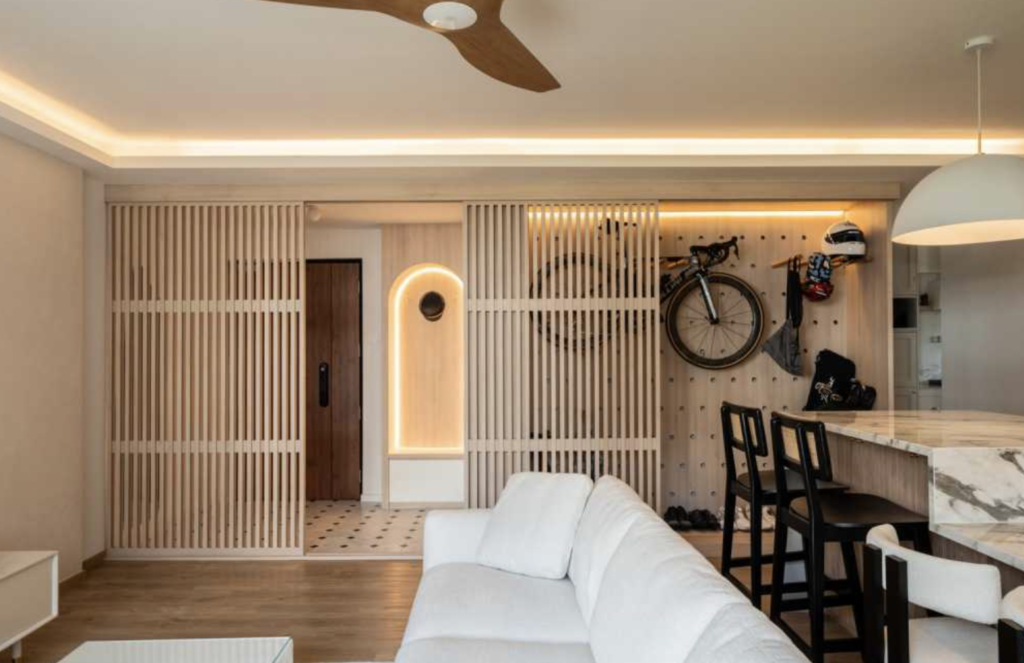
Setting Clear Priorities for Small-Space Living
In a small HDB flat you can’t have everything. You’ll need to prioritise. Ask these questions early:
- Do you work from home often?
- Do you host friends and family regularly?
- Do you cook heavy meals daily or just reheat simple dishes?
- Do you need a play area for kids or a quiet study zone?
- Do you want more storage or more open space?
Write your top three priorities. For example:
- Priority 1: Comfortable work from home area.
- Priority 2: Easy to clean home with minimal clutter.
- Priority 3: Flexible space for guests.
These priorities guide every design decision from where to put power points to how much built-in storage to add. Without this it’s easy to overdesign and end up with a home that looks nice but doesn’t fit your daily life.
Budgeting Smartly for an HDB Renovation
Renovation costs in Singapore can add up fast. It’s tempting to cut corners or chase every trend. Instead think long term and spend where it matters most.
You can break your budget into three groups:
- Must-spend (long-term items)
- Electrical rewiring
- Plumbing improvements
- Quality flooring
- Essential carpentry (kitchen cabinets, main wardrobe)
- Good-to-have (adds comfort and function)
- Built-in study desks
- Feature walls with storage
- Smart switches and dimmers
- Nice-to-have (purely aesthetic)
- Complex false ceilings
- Heavy decorative wall panels
- Niche displays
When planning Singapore HDB flat interior design ideas for small apartments and smart living put safety durability and function first. Fancy designs can be added later but hidden works like wiring and waterproofing are hard and expensive to redo.
Space-Saving Layout Ideas for Small Apartments
Open-Concept Living and Flexible Zones
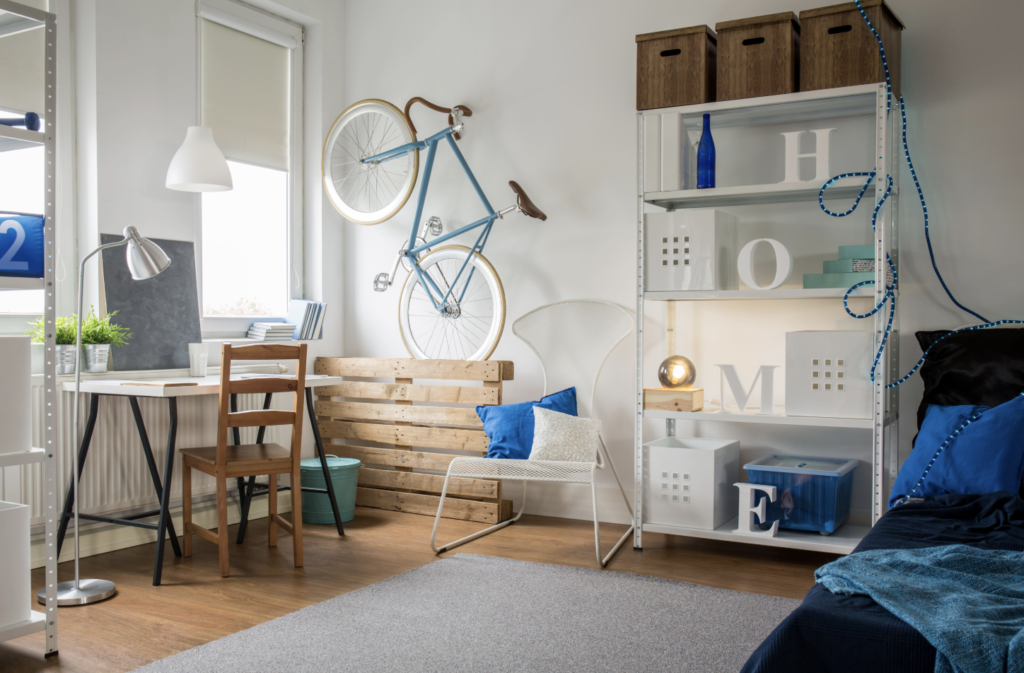
Open layouts can make a small HDB flat feel larger. Instead of many tiny rooms you create big flexible spaces.
Common open-concept options:
- Living-dining combo
Merge your living and dining rooms. Use a slim dining bench or bar counter as a subtle divider. - Semi-open kitchen
Hack a non-structural wall or add a glass partition to connect kitchen and living room while controlling smells. - Work-from-home corner
Carve out a small desk along a wall or window rather than a full enclosed study.
Tips for flexible zones:
- Use area rugs to define spaces without walls.
- Choose furniture on legs so more floor is visible.
- Avoid tall partitions that block light and views.
- Use sliding or folding doors instead of swing doors where possible.
This kind of layout supports smart living because one area can serve many functions. A dining table can double as a work desk. A sofa area can turn into a guest sleeping zone with a sofa bed or floor mattress.
Multi-Functional Rooms for Smart Living
In a compact HDB flat rooms should do more than one job. Multi-functional design keeps your home flexible as your life changes.
Ideas for multi-functional spaces:
- Bedroom + study
Use a platform bed with a built-in desk and drawers. Or place a wall-mounted fold-down table that tucks away when not in use. - Living room + guest room
A sofa bed, blackout curtains, and a small side cabinet can instantly convert your living area into a guest space. - Dining + work zone
A sturdy, simple dining table works as meeting space, homework area, and craft table.
When exploring Singapore HDB flat interior design ideas for small apartments and smart living, think in layers: daytime function and nighttime function. Ask yourself How else can this space work for me?
Smart Storage Solutions for Every HDB Room
Built-Ins vs Loose Furniture: What Works Best
Storage can make or break a small apartment. Built-ins give a clean seamless look while loose furniture offers flexibility.
Built-in storage pros:
- Maximises awkward corners and full wall height.
- Keeps dust traps to a minimum.
- Looks neat and integrated.
Built-in storage cons:
- Costly upfront.
- Hard to change if needs shift.
- Risk of overbuilding and shrinking space.
Loose furniture pros:
- Easy to move or swap out.
- Budget-friendly.
- Perfect for renters or those planning future upgrades.
Loose furniture cons:
- May leave unused gaps.
- Can look mismatched if not planned.
A smart mix often works best. For example:
- Built-in wardrobes and kitchen cabinets.
- Loose sideboards, bookshelves, and small storage units.
- Lightweight storage like baskets and boxes inside bigger cabinets.
Hidden Vertical and Modular Storage Ideas
To keep a small HDB home tidy without feeling cramped, use storage that works harder and smarter.
Hidden storage:
- Platform beds with deep drawers.
- Storage benches near the entrance or dining table.
- Ottomans with lift-up lids.
Vertical storage:
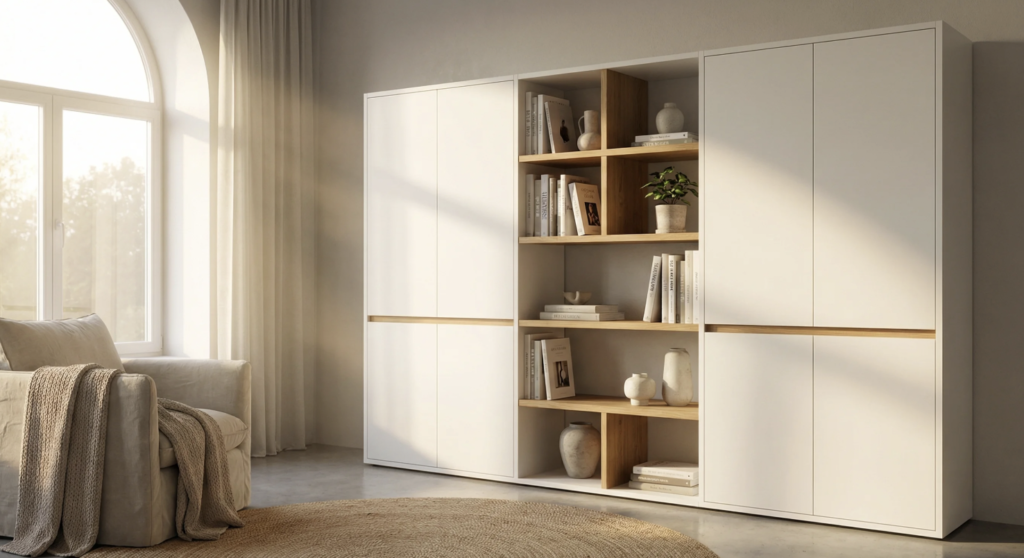
- Full-height cabinets around the TV area or bed.
- Wall-mounted hooks and rails in the kitchen and entryway.
- Shelves above doors or along corridor walls.
Modular storage:
- Stackable cubes for books and decor.
- Adjustable shelf systems in wardrobes.
- Movable drawer units under desks.
Try to store rarely used items higher up daily items at eye level and heavy items lower down. This keeps the home functional and safe, especially for children and seniors.
Visual Tricks to Make Your HDB Flat Feel Bigger
Colour Palettes That Work in Small Singapore Homes
Colour can change how big or small a space feels even when the size stays the same.
Good colour strategies for small flats:
- Light, neutral base
Whites off-whites, soft greys, and beiges bounce light and make rooms feel airy. - One or two accent colours
Use muted blues, greens, or earthy tones on small areas like cushions art or a single feature wall. - Low-contrast schemes
When floors walls and large furniture are similar in tone, the eye sees fewer breaks, which makes rooms feel larger.
Avoid too many dark or highly saturated colours on large surfaces. They can feel heavy in compact spaces. Dark tones can still work in small doses like on a sideboard or small wall panel.
Mirrors Lighting and Lines of Sight
Mirrors and lighting are time-tested ways to make a room feel more open and spacious.
Mirror tips:
- Place a large mirror opposite a window to reflect light.
- Use mirrored wardrobe doors in narrow bedrooms.
- Avoid placing mirrors where they reflect clutter.
Lighting layers:
- Ambient lighting: ceiling lights or cove lighting for general brightness.
- Task lighting: under-cabinet lights in the kitchen, reading lamps by the bed desk lights for work areas.
- Accent lighting: wall sconces or strip lights to highlight shelves or art.
Lines of sight:
- Keep tall furniture away from windows.
- Avoid blocking pathways with big sofas or cupboards.
- Use open shelving or glass doors in some areas so the eye can travel further into the room.
When you apply these visual tricks together Singapore HDB flat interior design ideas for small apartments and smart living become easier to achieve, even without major hacking or renovation.
Living Room Design Ideas for Compact HDB Flats
Seating TV Walls and Clutter Control
The living room is usually the heart of a Singapore HDB home. It’s where you relax, host guests, and sometimes work.
Seating tips:
- Choose a slim, L-shaped or 2.5-seater sofa instead of an oversized one.
- Add one or two light armchairs or stools that you can move easily.
- Use nesting coffee tables so you can tuck them away.
TV wall ideas:
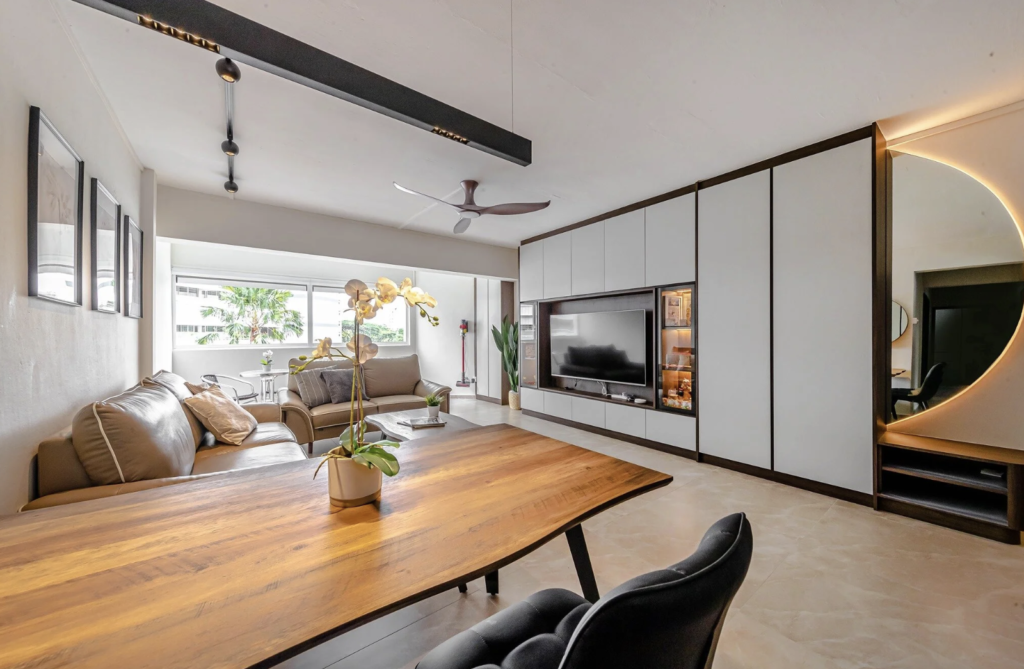
- Opt for a simple TV console with storage instead of thick feature walls.
- Mount the TV on the wall to free up surface space.
- Use a low, long console to keep the room grounded and open.
Clutter control:
- Have a small tray or box for remotes and chargers.
- Use baskets under the coffee table for magazines and kids’ toys.
- Limit display items and rotate them seasonally instead of showing everything at once.
Creating a Social Yet Relaxing Space
A good living room balances social energy and calm. It should feel welcoming during gatherings and restful on quiet evenings.
Strategies:
- Arrange seating so people can see each other not just the TV.
- Keep walkways clear to the kitchen and bedrooms.
- Add soft textures like rugs and cushions to dampen noise.
If you often host larger groups consider floor cushions or poufs that store away when not in use. For those working from home, set up a small desk along a window or wall so the living room can transform quickly from office to chill zone.
Bedroom Design Ideas for Restful and Practical Spaces
Platform Beds Wardrobes and Study Nooks
Bedrooms in HDB flats are often compact so every piece of furniture has to earn its place.
Platform beds:
- Offer deep storage for luggage, winter clothes, and spare bedding.
- Can integrate side tables and lighting.
- Need careful planning to avoid feeling too bulky, especially in very small rooms.
Wardrobes:
- Use full-height wardrobes to maximise vertical space.
- Choose sliding doors in tight rooms to save clearance.
- Plan internal layouts carefully: hanging space, drawers, shelves, and boxes.
Study nooks:
- A wall-mounted desk and a slim chair can fit even in small bedrooms.
- Shelves above the desk add vertical storage.
- If you share the room, consider a small curtain or screen for privacy during calls.
Privacy Comfort and Noise Control
A restful bedroom depends on more than just looks.
Privacy:
- Use solid doors and good curtains or blinds.
- If you have glass panels, add frosted film or double curtains.
Comfort:
- Choose a mattress suited to your body and climate.
- Use breathable bedding fabrics to cope with Singapore’s humidity.
- Keep the room visually calm with fewer patterns and simpler colours.
Noise control:
- Add rugs and soft furnishings to absorb sound.
- Use door seals or draft stoppers if corridor noise is an issue.
- Place wardrobes or bookshelves against shared walls to buffer sound between rooms.
With well-thought-out Singapore HDB flat interior design ideas for small apartments and smart living, even a tiny bedroom can feel like a private, luxurious retreat.
Kitchen Design Ideas for Small HDB Apartments
Galley L-Shaped and Open Kitchens
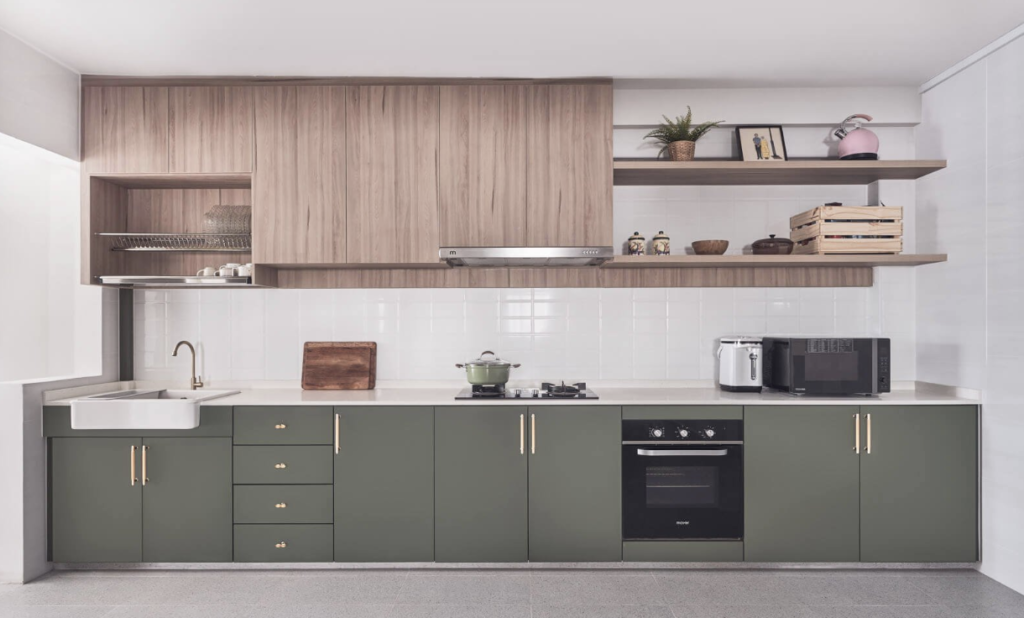
Most HDB kitchens are long and narrow (galley) or L-shaped. Each layout has strengths.
Galley kitchen:
- Two rows of cabinets facing each other.
- Efficient for cooking if the work triangle (fridge, sink, stove) is planned well.
- Needs good ventilation to avoid feeling stuffy.
L-shaped kitchen:
- Cabinets along two adjoining walls.
- Works well for open- or semi-open concepts.
- Leaves space for a small breakfast bar or dining table.
Open kitchen:
- Integrates with the living-dining area.
- Feels spacious and bright.
- Needs a strong hood and regular cleaning to manage grease.
Choose the layout that best matches your cooking habits. Heavy home cooks might prefer a semi-open or enclosed kitchen to contain smoke and smells. Light cooks can enjoy a fully open layout.
Storage Safety and Appliance Planning
Smart kitchen design is all about planning in detail.
Storage:
- Use full-height cabinets where possible.
- Drawers are more ergonomic than deep lower cabinets.
- Corner units with pull-out mechanisms help avoid dead spaces.
Safety:
- Maintain clear distance between sink and stove.
- Use non-slip floor tiles suitable for wet areas.
- Ensure good lighting over worktops and the stove.
Appliance planning:
- Choose compact, multi-function appliances where possible.
- Reserve space and power points for future items (like a dishwasher or water filter).
- Keep the fridge door swing in mind so it doesn’t block walkways.
A well-designed kitchen supports everyday smart living. You cook faster clean easier and waste less food when storage and circulation are planned right.
Bathroom and Service Yard Design Tips
Making the Most of a Tiny Bathroom
HDB bathrooms are often the smallest rooms in the flat yet they must handle many tasks.
Layout:
- Keep the wet and dry zones separate where possible.
- Use a glass shower screen or shower curtain to control splashes.
- Position the sink and mirror in the brightest spot.
Storage:
- Install mirrored cabinets above the sink.
- Add corner shelves in the shower area.
- Use slim cabinets or wall-mounted holders for toiletries.
Finishes:
- Light-coloured tiles help the space feel bigger.
- Large-format tiles reduce grout lines, making cleaning easier.
- Non-slip floor tiles are essential for safety.
Laundry Drying and Utility Storage in Small Spaces
The service yard in an HDB flat has to do a lot of work. It usually handles laundry drying and often extra storage.
Laundry solutions:
- Use a stackable washer and dryer if you have both.
- Install retractable drying racks on the ceiling or wall.
- Use mesh bags or baskets to sort clothes.
Utility storage:
- Wall-mount cleaning tools to keep floors clear.
- Use slim shelving units for detergents and household items.
- Store seldom-used items in labelled boxes.
By treating the bathroom and service yard as real design zones not just afterthoughts, you free up storage elsewhere and keep the rest of the home calm and clutter-free.
Smart Home Technology for HDB Smart Living
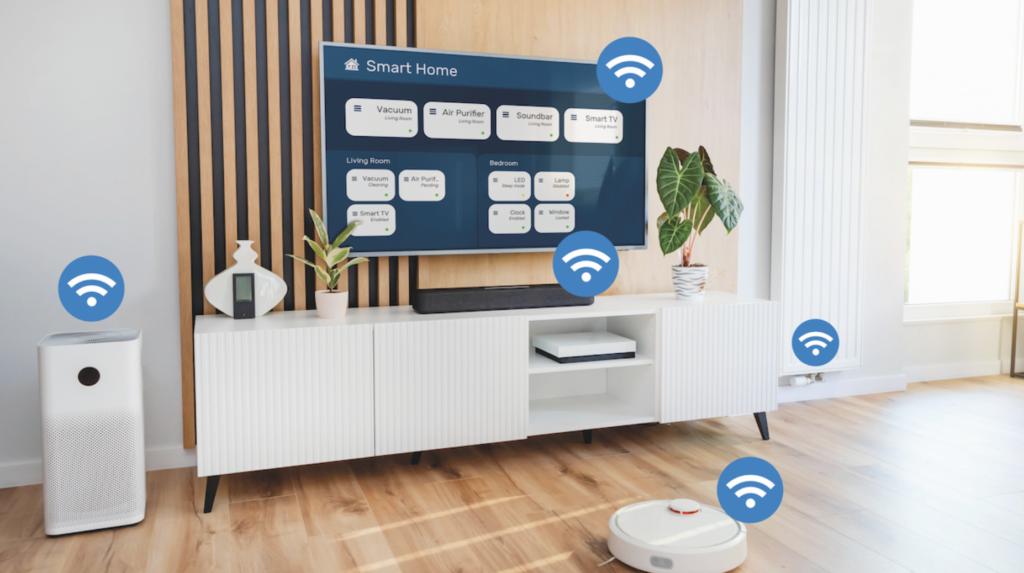
Lighting Climate and Security Automation
Smart home systems can make daily life smoother and more energy-efficient.
Lighting:
- Smart bulbs or switches let you dim lights or change colour tones.
- Preset scenes (work, relax, movie) adjust multiple lights at once.
- Motion sensors in bathrooms or corridors help save energy.
Climate:
- Smart aircon controls can pre-cool rooms before you get home.
- Fans that come with remote or app controls offer both convenience and energy-efficient operation.
- Sensors can monitor temperature and humidity for comfort.
Security:
- Smart locks let you enter without keys and share temporary access codes.
- Video doorbells help you see visitors even when you’re out.
- Simple sensors on doors and windows add peace of mind.
Choosing Devices That Suit Singapore HDB Flats
Not all gadgets work well in a compact HDB space. When selecting devices, consider:
- Compatibility with your existing router and Wi-Fi coverage.
- How visible or bulky the device will look in small rooms.
- Whether it needs drilling or hacking, which may affect HDB rules.
Start small with a few key items like smart lights and a video doorbell, then expand gradually. The goal is to support Singapore HDB flat interior design ideas for small apartments and smart living, not to overload your home with devices you rarely use.
Styling Decor and Maintenance for Long-Term Comfort
Textiles Artwork and Greenery in Small Homes
Styling finishes your home and gives it personality.
Textiles:
- Use curtains or blinds that match wall tones for a soft, unified look.
- Layer cushions and throws for comfort without visual clutter.
- Choose flat-weave rugs that are easier to clean and safer in small spaces.
Artwork:
- A few larger pieces often look better than many small ones.
- Place art where it can be enjoyed daily, like above the sofa or dining table.
- Use frames that match your overall colour scheme.
Greenery:
- Small indoor plants add life and improve air quality.
- Choose low-maintenance plants suited to Singapore’s climate and your light levels.
- Use slim plant stands or window ledges to save floor space.
Cleaning Decluttering and Future-Proofing Your Flat
A stylish home is hard to enjoy if it’s always messy. Maintenance is part of design.
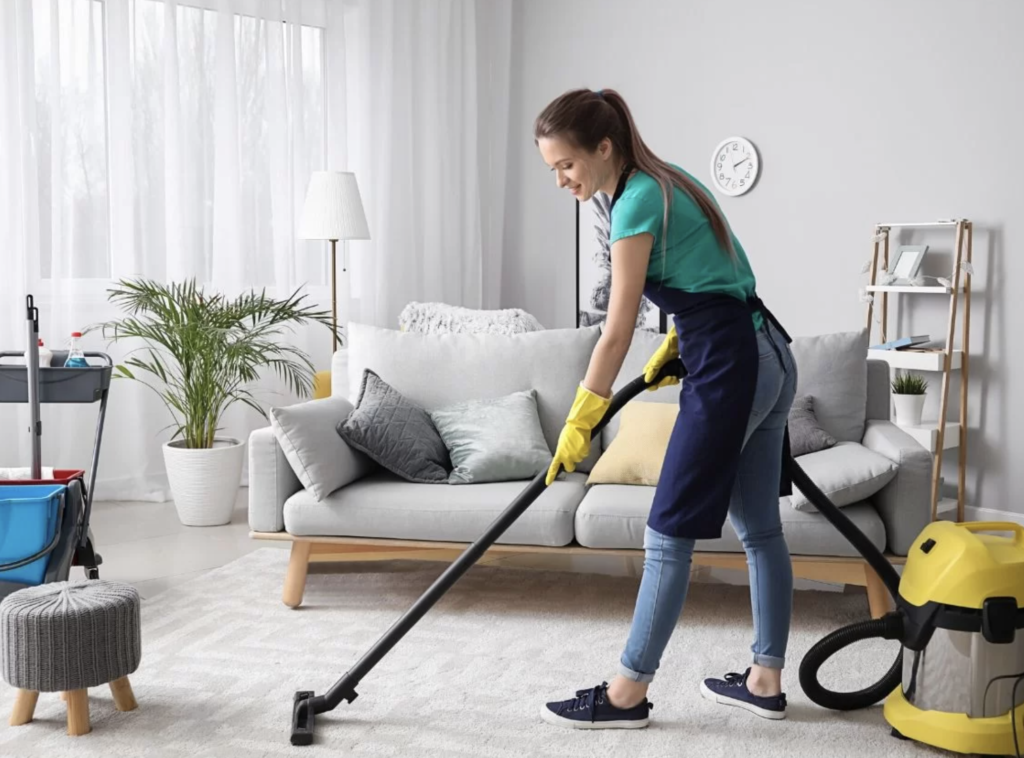
Cleaning:
- Choose finishes that are easy to wipe down and resist stains.
- Plan storage for cleaning tools so they’re accessible but hidden.
- Schedule regular light cleaning instead of occasional heavy sessions.
Decluttering:
- Follow a one in one out rule for clothes books, and decor.
- Use baskets and boxes to group small items.
- Review storage every few months and let go of what you no longer use.
Future-proofing:
- Pick neutral main finishes so you can update the look with smaller items.
- Leave some flexibility in layouts for future needs (like a baby elderly parent or home office change).
- Avoid overly trendy built-ins that may date quickly.
With steady upkeep your home stays comfortable and supports your lifestyle for years not just right after renovation.
FAQs on Singapore HDB Flat Interior Design
- How do I start planning my HDB interior design?
Begin by listing your daily routines and top priorities. Measure your flat draw a basic floor plan and mark fixed elements like windows and doors. From there plan zones (living dining work rest) and decide where to place key furniture. Then think about storage and lighting. - Can I hack walls in an HDB flat to create an open layout?
You can only hack non-structural walls and sometimes you need approval. Structural walls columns and certain parts of the bathroom and kitchen cannot be removed. Always check with HDB and a licensed contractor or interior designer before any hacking. - What colours work best in a small HDB apartment?
Light, neutral colours like white, beige, and soft grey make small spaces feel bigger and brighter. You can add colour with cushions rugs and artwork. Try to keep large surfaces like walls and big furniture less contrasting to avoid visual clutter. - How can I increase storage without making my flat feel cramped?
Focus on vertical and hidden storage. Use full-height wardrobes platform beds with drawers, and built-in cabinets with clean lines. Balance this with some open space and lighter loose furniture so the home doesn’t feel too boxed in. - Are smart home gadgets worth it in a small HDB flat?
Yes, if chosen wisely. Smart lights locks and aircon controls can improve comfort save energy and increase safety. Start with a few essentials then add more if they truly support your lifestyle and budget. - Do I need an interior designer for my HDB renovation?
It’s not mandatory, but an experienced designer can help you navigate HDB rules plan efficient layouts, and manage contractors. For simple updates, some owners handle things on their own. For bigger renovations a designer often saves time and reduces costly mistakes. - How can I make my HDB living room look bigger without hacking?
Use light colours choose slim furniture on legs and keep windows clear. Add a large mirror to reflect light, and avoid heavy bulky TV feature walls. Keep clutter under control with closed storage and simple decor. - What’s the most important thing to focus on in a small HDB bedroom?
Prioritise a good bed and enough storage for daily items. Plan the wardrobe carefully and avoid too many extra pieces of furniture. Keep the room calm with soft colours and simple styling to support restful sleep.
Conclusion: Designing a Small HDB Flat for Smart Happy Living
Living in a small HDB flat in Singapore doesn’t mean you have to sacrifice comfort or style. With thoughtful planning the right Singapore HDB flat interior design ideas for small apartments and smart living can turn limited square footage into a home that feels generous calm and deeply practical.
Start by understanding your layout and constraints, then set clear priorities. Use space-saving layouts, smart storage and visual tricks to open up your rooms. Design each area—living room, bedroom kitchen bathroom, and service yard to work hard for your daily needs. Layer in smart home technology and simple tasteful styling to support a modern efficient lifestyle.
When function and aesthetics work together even the humblest HDB flat can become a place you’re proud to call home today and for many years to come.
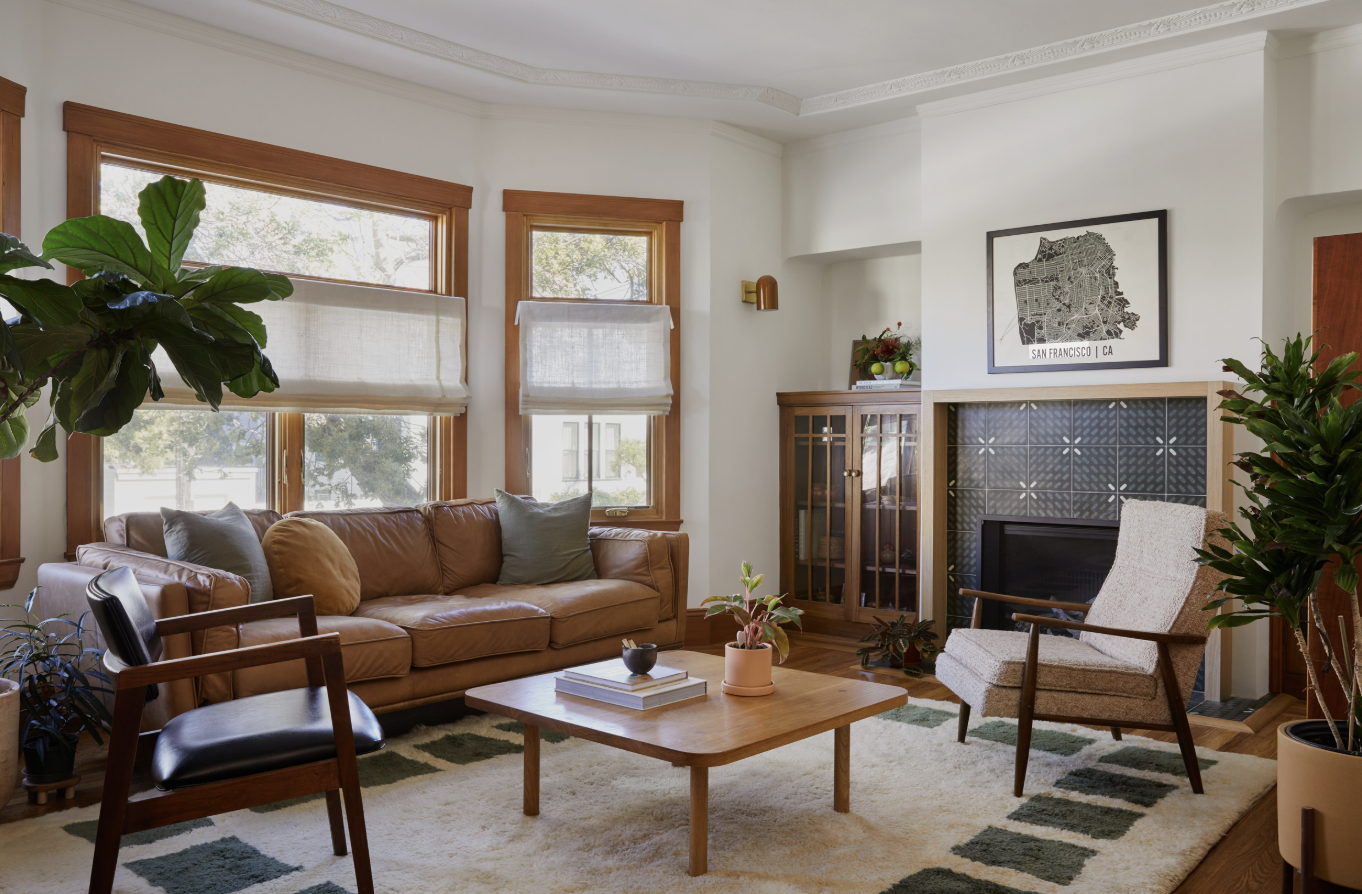
Designing a stylish, comfortable home in Singapore can feel tricky when you’re working with a compact HDB or condo. The good news is that with smart planning and a few DIY home decor ideas for Singapore homes, small spaces can still offer big style, comfort, and personality. You don’t need a huge budget or a massive floor plan just a thoughtful approach and some creativity.
In this guide, you’ll find practical, hands‑on ideas you can implement step by step. We’ll cover planning, storage, living room and bedroom styling, and even often ignored areas like service yards and bomb shelter doors. Along the way, we’ll keep things realistic for local homes, regulations, and shopping options so you can actually pull these projects off.
Understanding the Singapore Home: HDBs, Condos, and Limited Space
Before diving into DIY home decor ideas for Singapore homes, it’s useful to understand the unique constraints we’re working with. Most Singapore households live in HDB flats or private condos. These homes are generally well‑planned, but they’re also compact and come with rules.
Typical Layout Challenges
- Limited square footage
A 3‑room or 4‑room HDB can feel tight once you add furniture. Condos may have high ceilings but narrow living areas and small bedrooms. - Structural walls and columns
You can’t simply hack any wall you like. Load‑bearing walls, beams, and columns must stay. That means DIY solutions need to work around the existing structure, not against it. - Standardised fittings
HDB main doors, bomb shelter doors, and windows follow certain specifications. This is useful you can plan DIY decor that fits standard sizes, like magnetic covers for bomb shelter doors or ready‑made blinds. - Shared services
Service yards, risers, and air‑con ledges are practical but often unattractive. Instead of hiding them, it’s better to integrate them into your decor thoughtfully.
Opportunities Hidden in Constraints
- Vertical height
Even in a small flat, you’ve got walls. With careful shelving, hooks, and rail systems, vertical surfaces become storage and display space. - Natural light
Many Singapore units enjoy good daylight, especially in living rooms and bedrooms. DIY decor that bounces or filters light like mirrors, sheer curtains, and light‑coloured furniture can double the perceived space. - Uniform bones
Because many flats share similar layouts, you can learn from what others have done. Local forums, Instagram accounts, and portals like Qanvast offer ideas proven to work in HDBs and condos.
When you see your home as a set of workable constraints rather than a list of problems, it’s much easier to create big style in a small space.
Planning Your DIY Home Decor Project the Smart Way
Before grabbing a drill or paint roller, spend time planning. This step isn’t glamorous, but it’ll save money, stress, and rework.
Reading Your Floor Plan and Measuring Like a Pro
- Start with the floor plan
- Identify walls you’re not allowed to hack or drill deeply (e.g., bomb shelter walls, structural walls).
- Note windows, doors, switches, and sockets they affect where you can place furniture and feature walls.
- Measure the key dimensions
- Wall lengths and heights
- Window heights and widths
- Space between furniture and openings (door swing, wardrobe doors)
- Use a simple table like this to stay organised:
| Area | Key Measurement | Notes |
| Living room | TV wall: 3.0 m wide | Fits 55–65″ TV + shelves |
| Bedroom 1 | Bed wall: 2.6 m | Enough for queen + side tbl |
| Kitchen | Counter: 2.4 m long | Space for 3 rails above |
Map circulation paths
Make sure there’s at least 80–90 cm for walkways. No decor upgrade is worth a home you can’t walk through comfortably.
Setting a Realistic Budget and Timeline
- Budget by room, not by item
Decide, for example, “$800 for living room DIY upgrades” and work backwards. This helps you prioritise high‑impact pieces like lighting and rugs over small accessories. - Phase your projects
- Phase 1: Paint, lighting, basic furniture
- Phase 2: Storage systems and feature walls
- Phase 3: Styling (art, cushions, plants, decor)
- Spreading projects over a few months keeps fatigue and overspending in check.
- Account for hidden costs
- Delivery fees (especially from overseas platforms)
- Tools you may need to buy or borrow
- Mistakes always budget a 10–15% buffer
Good planning is the backbone of the best DIY home decor ideas for Singapore homes, it keeps style, function, and money aligned.
Space‑Saving Living Room DIYs for Big Style in Small Flats
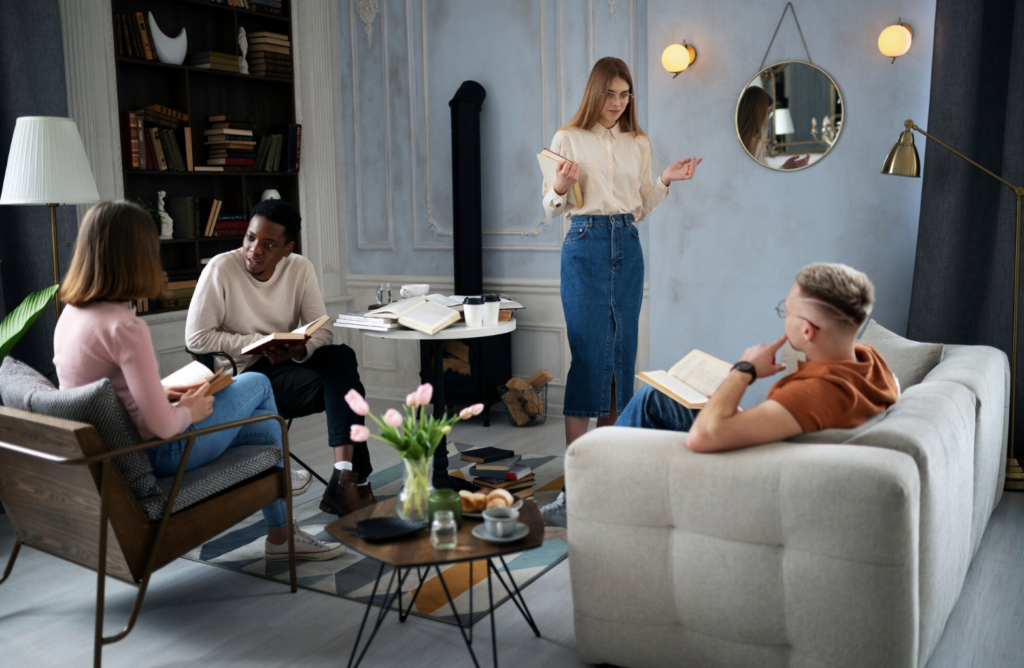
The living room is where guests gather and families relax, so every centimetre counts.
Multi‑Purpose Furniture and Layout Tricks
- Choose slim, raised furniture
Sofas and TV consoles with slim arms and legs show more floor and make the room feel airier. - Use nesting tables instead of a bulky coffee table
Slide them out when you need extra surface space, and nest them back together when you’re done. - Consider a wall‑mounted fold‑down desk
Perfect for WFH without a dedicated study.
Wall Treatments: Paint, Decals, and Feature Walls
- Accent walls
- Paint just one wall in a calm, muted colour (sage, taupe, dusty blue) to add depth.
- In small homes, avoid very dark colours on multiple walls they shrink the space visually.
- Painter’s tape patterns
Create geometric designs with painter’s tape, then paint over. Peel the tape to reveal clean lines. - Wall decals and removable wallpaper
- Ideal for rental units where you can’t make permanent changes.
- Go for subtle textures or patterns that won’t overwhelm a small room.
TV Walls, Media Consoles, and Cable Management
A clean TV wall is one of the fastest ways to create a “designer” feel.
- Floating TV consoles
Mount your console to create floor space underneath for slim baskets or a robot vacuum. - Integrated shelves
Build a simple plywood frame with open cubbies around the TV for books, photos, and decor pieces. - Cable concealment
- Use cable raceways painted the wall colour.
- Gather cables in fabric sleeves or cable boxes behind the console.
Lighting Layers for Lounge‑Worthy Evenings
- Ceiling lights for general brightness
- Floor or table lamps pointing at walls or ceilings for soft, ambient light
- LED strips under consoles or shelves to add a modern touch with little cost
With the right layout and lighting, the living room becomes a showcase of DIY home decor ideas for Singapore homes, proving that small spaces can be stylish and practical.
Functional and Beautiful DIY Ideas for Singapore Bedrooms
Bedrooms in HDBs and condos are often compact, especially common bedrooms. The goal here is to maximise comfort, storage, and a calming vibe.
DIY Bed Frames, Headboards, and Under‑Bed Storage
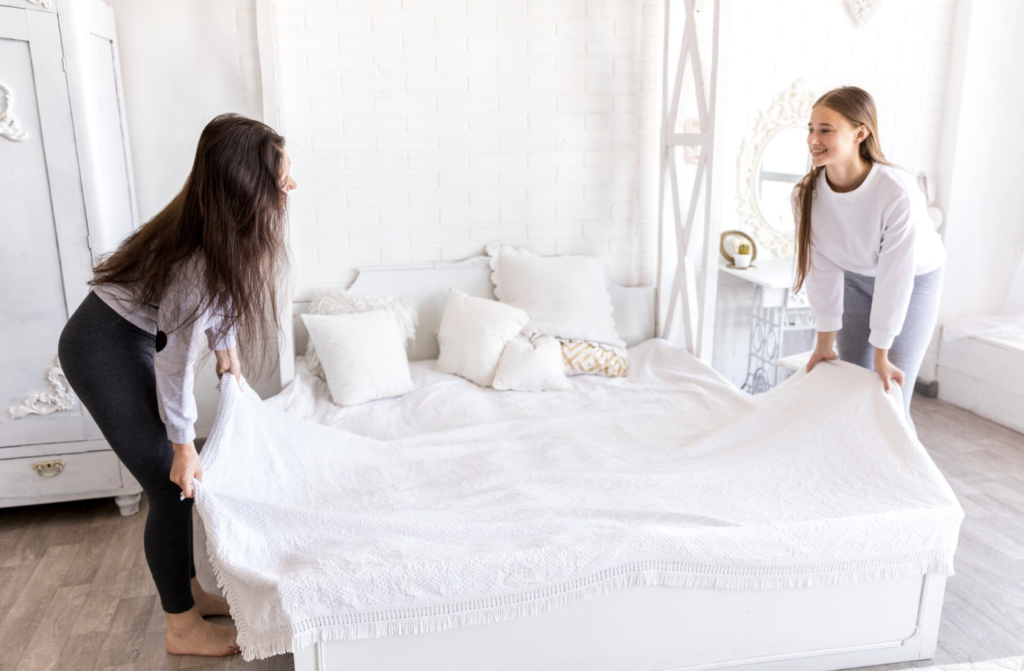
- Platform bed with storage
If you’re handy, build a simple raised platform using plywood and timber supports, leaving compartments underneath for boxes or luggage. - Headboard upgrades
- Padded fabric headboard using plywood, foam, and stapled fabric.
- Rattan or wooden panels mounted on the wall for a natural, airy look.
- Under‑bed storage
- Use rolling crates or low plastic boxes for linens and off‑season items.
- Label everything clearly for easy access.
Wardrobe Optimisation for HDB and Condo Bedrooms
Many built‑in wardrobes waste vertical space.
- Add extra rods to double your hanging space for shorter items.
- Use slim velvet hangers to reduce bulk.
- Install clip‑on shelves or stackable drawers at the bottom for folded items.
- Hang hooks or pegboards on wardrobe doors for accessories and small bags.
Lighting and Soft Furnishings for Cosy Bedrooms
- Blackout or dim‑out curtains
Ideal for bedrooms facing bright street lights. Combine with sheer curtains for daytime. - Bedside sconces or clamp lamps
These free up bedside table space and add hotel‑style comfort. - Textiles
- Layer rugs, even in small rooms a runner beside the bed adds warmth.
- Choose breathable materials like cotton or linen to suit Singapore’s humidity.
With these DIY home decor ideas for Singapore bedrooms, you can transform even a compact room into a calm, restful retreat.
Compact Kitchen and Dining DIY Decor Hacks
Kitchens in many Singapore homes are long and narrow, while dining areas are often just a corner of the living room.
Small‑Footprint Dining Areas and Foldable Furniture
- Drop‑leaf or extendable tables
Keep the table small for daily use; extend when guests come. - Bench seating
Benches tuck fully under the table, saving space compared to bulky chairs. - Wall‑mounted, fold‑down tables
Great for BTOs or studio units; fold them up when the floor is needed for other activities.
Open Shelving and Vertical Kitchen Storage
- Install open shelves above existing counters for spices, jars, and decor.
- Use magnetic strips for knives to free up drawer space.
- Add rail systems with hooks for utensils, mugs, or small potted herbs.
Smart Pantry and Fridge Organisation
- Transfer dry goods into clear, stackable containers and label them.
- Use turntables (lazy Susans) in deep cabinets to avoid “lost” items at the back.
- Assign every shelf a category—snacks, breakfast, baking, condiments—so the whole family knows where things belong.
These practical kitchen DIY home decor ideas for Singapore homes help keep cooking areas tidy and attractive, even when space is tight.
Stylish Storage Solutions for Clutter‑Free Homes
Storage is the secret hero of small‑space living. With the right DIY solutions, you can hide clutter and display the things you love.
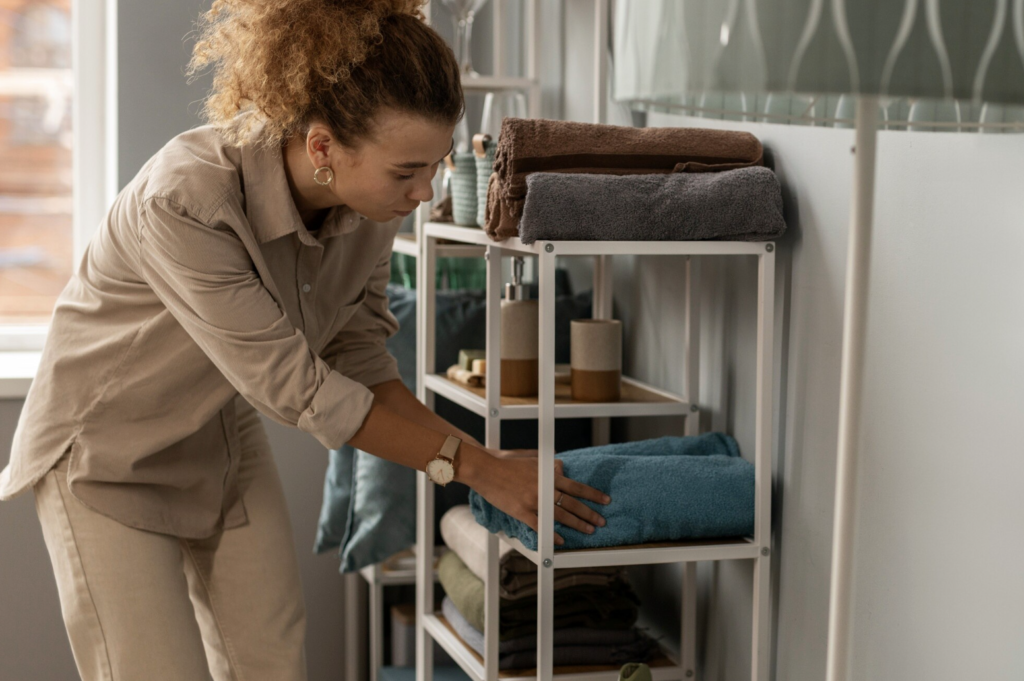
Hidden Storage and Floating Systems
- Floating shelves in living rooms, bedrooms, and even bathrooms
Mount at eye level or higher to keep floors clear. - Ottomans and benches with hidden storage
Perfect for storing toys, spare cushions, or shoes. - Risers inside cabinets
Simple wire racks double your shelf space for plates, bowls, and canned food.
Entryway, Corridor, and Bomb Shelter Door Styling
- Slim shoe cabinets with mirror fronts to visually enlarge narrow entryways.
- Wall hooks or a peg rail for bags, umbrellas, and keys right by the door.
- Bomb shelter door
- Cover with a custom‑sized magnetic board or removable vinyl decal (check that ventilation gaps stay unobstructed).
- Use it as a chalkboard or photo wall.
With thoughtful planning, storage solutions become part of the decor, not an afterthought.
Balcony, Service Yard, and “Extra Corners”: Outdoor‑Inspired DIY Ideas
Many Singapore homes have small balconies or service yards that become dumping grounds. With some effort, these areas can become mini sanctuaries.
DIY Plant Corners, Mini Balconies, and Service Yard Upgrades
- Vertical plant walls
Use grid panels or wooden trellises with hooks for hanging pots. Choose hardy plants like money plants, snake plants, and ferns. - Compact balcony seating
- Foldable chairs and a small table that can be tucked away.
- Floor cushions or outdoor‑friendly bean bags for a relaxed vibe.
- Service yard makeovers
- Install hanging racks or ceiling‑mounted laundry systems to free floor space.
- Add stackable storage for detergents and cleaning tools in labelled bins.
- Use waterproof mats and a small rug to visually zone the area.
Even a forgotten corner beside the window can become a cosy reading nook with a slim chair, wall lamp, and small shelf.
Budgeting, Sourcing Materials, and Shopping Smart in Singapore
DIY doesn’t mean you must do everything from scratch. In Singapore, you can mix off‑the‑shelf pieces with custom touches.
Where to Buy Affordable DIY Decor Materials in Singapore
- Brick‑and‑mortar stores
- Big box: IKEA, BHG, Tokyu Hands
- Hardware: Horme Hardware, Selffix, local neighbourhood hardware shops
- Fabric and craft: Spotlight, People’s Park Centre (for textiles)
- Online platforms
- Shopee, Lazada, Taobao (use reviews and buyer photos to gauge quality)
- Carousell for pre‑loved furniture you can upcycle
Stretching Your Decor Dollar
- Focus spending on:
- Good mattresses and sofas
- Durable storage systems
- Reliable lighting and fans
- Save on:
- Decor accessories (cushions, vases, art prints)
- Simple shelves and organisers
- Items you can DIY or upcycle
A smart shopping strategy lets you execute many DIY home decor ideas for Singapore homes without blowing your budget.
Safety, Regulations, and What NOT to DIY in Singapore Homes
Not every project should be DIY, especially in high‑rise buildings.
When to Call a Professional Contractor or Designer

- Electrical work
New wiring, shifting power points, or working near water should be done by a licensed electrician. - Gas lines and major plumbing
Never DIY gas work. Call the relevant utility provider or licensed contractor. - Structural work
Hacking walls, altering beams, or modifying bomb shelters require HDB or condo MCST approval and licensed contractors.
General Safety Tips
- Use proper tools and safety gear (gloves, safety glasses, sturdy ladder).
- Turn off power at the mains when working near electrical fittings.
- Follow load limits for shelves and brackets, especially on hollow walls.
- Anchor tall pieces, such as bookshelves, firmly to the wall so they don’t tip over.
Respecting guidelines keeps you and your neighbours safe while you experiment with DIY home decor ideas for Singapore homes.
Eco‑Friendly and Sustainable DIY Decor Choices
Styling your home doesn’t have to come at the environment’s expense.
Low‑Waste Projects and Upcycling Ideas
- Upcycle existing furniture
- Sand and repaint an old TV console.
- Change handles and knobs for an instant refresh.
- Choose natural, durable materials
- Solid wood, rattan, bamboo, and cotton tend to age better than disposable plastics.
- Incorporate plants
- They improve air quality, add life to your space, and can be propagated to reduce buying more.
- Buy better, buy less
Instead of frequent decor hauls, invest in timeless, flexible pieces you can move between rooms.
Eco‑conscious choices add another layer of meaning to your DIY home decor ideas for Singapore homes, making them kinder to both your wallet and the planet.

Frequently Asked Questions (FAQs)
1. How do I start DIY home decor ideas for Singapore homes if I’ve never done any DIY before?
Begin with low‑risk, reversible projects like rearranging furniture, adding soft furnishings (rugs, curtains, cushions), and using removable wall hooks or decals. Once you’re comfortable, move on to simple shelving or small painting projects. Build confidence step by step.
2. Are DIY projects allowed in HDB flats?
Yes, but with limits. Minor works like painting, adding shelves, or installing curtains are usually fine. Structural work, hacking walls, modifying bomb shelters, and major electrical or plumbing changes require permits and licensed contractors. Always check HDB’s renovation guidelines and your estate’s rules.
3. What’s the most effective first upgrade for small living rooms?
Lighting and layout. Rearrange furniture to open up walking paths, then layer lighting with ceiling lights, floor or table lamps, and maybe LED strips. These changes are relatively cheap but dramatically affect how spacious and cosy your living room feels.
4. How can I make my small bedroom look bigger?
Use light, neutral wall colours, keep furniture slim and raised on legs, avoid clutter and hang curtains closer to the ceiling to create the illusion of height. Adding a large mirror opposite a window also bounces light and visually enlarges the space.
5. Where can I find local inspiration for DIY home decor ideas for Singapore homes?
Look at Singapore focused platforms and social media accounts showcasing HDB and condo homes. Sites like Qanvast, local interior design blogs, and Instagram hashtags such as #sginterior or #hdbrenovation offer real‑life examples you can adapt to your own space.
6. How do I keep DIY costs low without compromising quality?
Plan a clear budget, prioritise high‑impact areas, and mix affordable base pieces with a few quality investments. Upcycle existing furniture, shop pre‑loved where possible, and tackle projects in phases. Paying slightly more for durable items often saves you money over time.
Conclusion: Turning Small Singapore Spaces into Big‑Style Homes
With thoughtful planning and the right DIY home décor ideas for Singapore homes, small spaces truly can offer big style. Understanding your floor plan, working within local rules, and choosing multi‑functional, space‑saving solutions let you create a home that’s both beautiful and practical.
Start with one room maybe your living room or bedroom and focus on layout, lighting, and storage. Layer in colour, texture, and personal touches bit by bit. Over time, even a modest HDB or condo can feel like a curated, comfortable sanctuary that reflects your personality and supports your daily routines.
You don’t need a designer budget or a huge house. You just need a clear plan, a willingness to try, and a vision of the kind of home you want to live in. From there, every small DIY step brings you closer to big style in your Singapore home.
Read More on Sgtrends


Safe Singapore Stocks for Long-Term Investing: Build a Stable Wealth Portfolio

7 Smart Business Optimization Strategies Driving Singapore Digital Economy

AI-Driven Business Intelligence: Transforming Enterprise Strategy in Singapore
Wedding day horror: Groom falls to death at VOCO Orchard Hotel on Wedding Day
EdTech in Singapore: 150+ Companies Driving $180M Digital Learning Revolution
Singapore JC Ranking: A Complete Guide for Students
-
Blog12 months ago
Wedding day horror: Groom falls to death at VOCO Orchard Hotel on Wedding Day
-
Technology11 months ago
EdTech in Singapore: 150+ Companies Driving $180M Digital Learning Revolution
-
Education1 year ago
Singapore JC Ranking: A Complete Guide for Students
-

 Food10 months ago
Yi Dian Dian Bubble Tea Singapore: Menu, Outlets & Try Drinks
-
 Blog1 year ago
Best of SG with Singapore Rediscover Voucher
-
 Business1 year ago
What to Expect During PSLE Marking Days 2023
-
 Digital Marketing10 months ago
How to Run Effective Xiaohongshu Advertising Campaigns
-
 Digital Marketing10 months ago
Why Xiaohongshu Ads Are a Must for Reaching Chinese Consumers