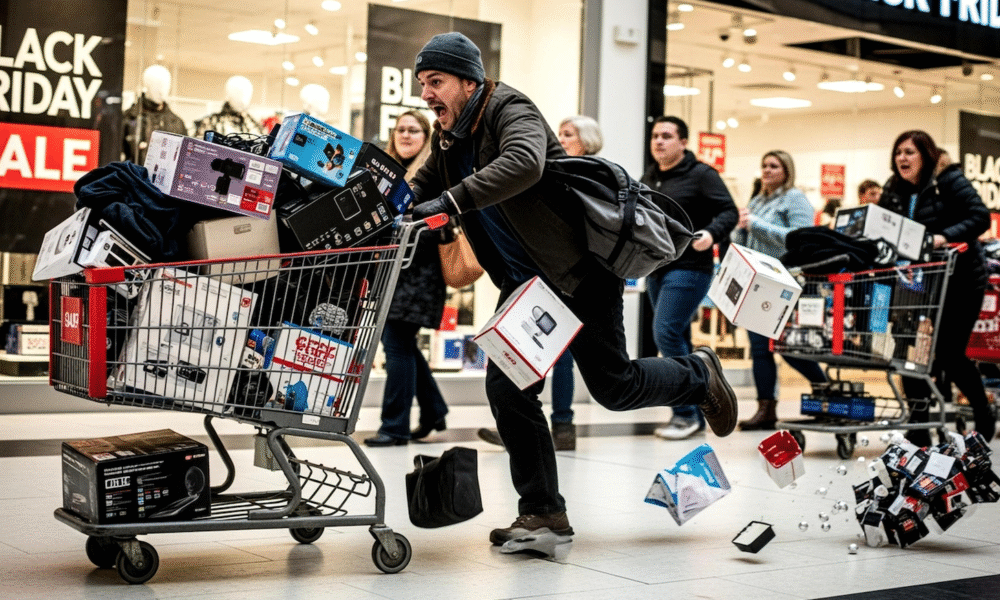
Black Friday in the United States has taken a sharp digital turn, with millions of consumers choosing online deals over waiting in long, icy queues. This year, shoppers spent more than last year, yet most transactions moved through online platforms instead of physical stores. The once-iconic scenes of chaotic lines and door-crashing crowds have become a thing of the past.
Online Spending Rises as Traditional Crowds Shrink
Thanksgiving Day transformed into a major online shopping event. Many Americans stayed indoors and grabbed deals from their phones or laptops. While overall Black Friday spending increased by 5%, retailers noted the absence of the usual early-morning rush.
Brick-and-mortar stores still saw visitors, but the atmosphere was noticeably quieter. People appeared more cautious with their money, especially amid inflation and concerns about a cooling job market. The financial uncertainty kept many from splurging without thought.
Grace Curbelo, a 67-year-old shopper at Woodbury Common in New York, shared her hesitation. She said she was avoiding unnecessary spending because she was unsure of where the economy was heading.
Rising Prices Push Consumers Toward Digital Deals
Adobe Analytics reported a 5.3% jump in Thanksgiving Day online spending, reaching US$6.4 billion. Extended promotional periods helped spread out purchases, reducing the urgency of rushing into stores on Black Friday morning.
According to Adobe’s Vivek Pandya, shoppers relied heavily on influencer promo codes and Cyber Week discounts. However, rising prices continued to influence consumer behavior.
Retail prices have climbed due to inflation and former President Donald Trump’s tariffs. The Tax Foundation estimates these tariffs added nearly 4.9 percentage points to retail prices. Salesforce data also shows US online prices rising 8% year over year, compared to a 5% increase globally.
Caila Schwartz of Salesforce noted that the US is experiencing the most dramatic increase in average selling prices. Retailers appear to be protecting their profit margins by passing some costs onto consumers.
This price pressure comes at a tough time. Unemployment has reached a four-year high, and consumer confidence has fallen to its lowest point in seven months. Many households are cutting back on big purchases and travel plans.
High-Income Consumers Keep the Market Moving
Despite economic concerns, affluent households continued spending at strong levels. Moody’s Analytics found that Americans earning US$250,000 or more now make up nearly 48% of all consumer spending, compared to about 35% in the mid-1990s.
These buyers are helping sustain luxury and home-related categories. For example, at a Sephora in North Carolina, Heather Cheatham, 50, shopped freely for perfumes, cosmetics, and holiday gifts without worrying about her budget.
A Quiet Black Friday Morning Across US Malls
Retail analyst Marshal Cohen visited malls across New York and New Jersey. He described this year’s Black Friday sunrise as unusually calm. Instead of chaotic crowds, stores opened to a slower, more controlled flow of visitors.
Some stores still tried to recreate old-school excitement. Target handed out swag bags to the first 100 customers. Walmart saw an increase in traffic later in the morning.
In Atlanta, only a small group of shoppers lined up in the cold outside Walmart. Among them was Quantavius Shorter, a diesel mechanic who secured a Roku smart TV for US$298. He said he arrived early because the deal usually sells out fast.
Global Black Friday Faces Labor Unrest
While US stores experienced a quieter shopping day, Europe faced disruptions. Amazon warehouse workers in Germany staged strikes, and Zara stores in Spain prepared for demonstrations. In the US, Starbucks employees expanded their strike to 26 more stores, adding a layer of labor tension to the shopping weekend.
A New Era for Black Friday
Black Friday is no longer defined by chaotic in-store scenes. Instead, it has evolved into a more digital, more cautious, and more selective shopping event. While online sales continue to rise, economic pressure and shifting consumer habits are reshaping the holiday shopping landscape.
As the season moves into Cyber Monday and beyond, retailers will rely heavily on online promotions—and the spending power of wealthier households—to drive momentum.